A Marine Biodiversity Hotspot Under Stress


Climate Adaptation, Political Economy, and Governing at the Scale of the Ecosystem in the Verde Island Passage


This series grew out of a longer inquiry into climate change adaptation in the Verde Island Passage – an inquiry that began as an academic exercise but gradually shifted in emphasis as fieldwork, community engagement, and policy analysis unfolded alongside one another. What became increasingly difficult to ignore was the gap between how adaptation is often framed in policy and how it is actually experienced and negotiated in coastal communities. The concept of transformative adaptation provided a useful analytical lens, but it also raised questions: where, and under what conditions, does transformation begin to take shape? And why does it so often remain partial, uneven, or bounded? The Verde Island Passage, with its ecological significance and layered development pressures, offered a setting in which these questions could be explored in a more grounded and, at times, more unsettled way.

Part 1: The Experience of Fragmented Adaptation

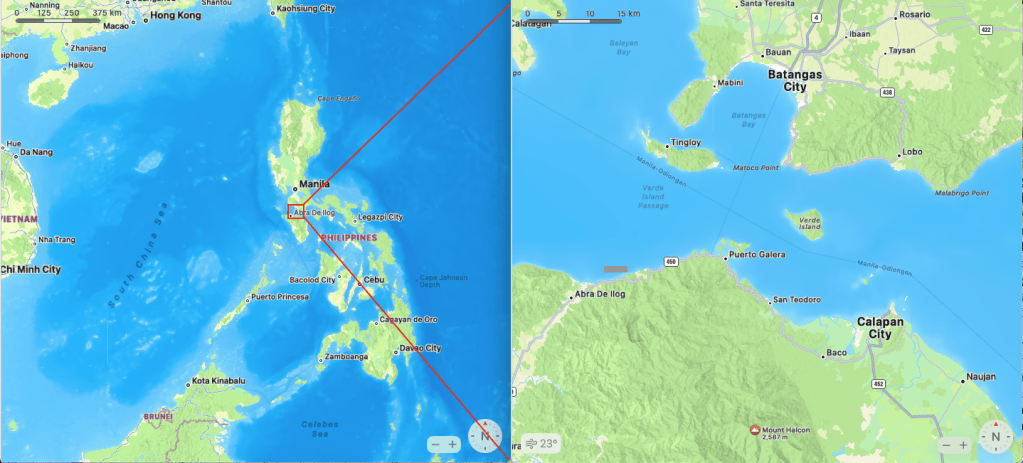
The Verde Island Passage (VIP) is often described as the “center of the center” of nearshore marine fish biodiversity. Stretching between Batangas and the island provinces of Oriental and Occidental Mindoro, Marinduque, and Romblon, it contains an extraordinary concentration of marine life—around 350 coral species and 1,736 nearshore fish species, representing more than sixty percent of globally documented nearshore fish diversity (SEA Institute, 2020; ProtectVIP, 2023). For scientists, this makes the Passage globally significant. For coastal communities, the significance is more immediate. It is where livelihoods are made, sustained, and increasingly put at risk.

More than two million fishers depend directly on these waters. The Passage also supports tourism, maritime transport, and an expanding network of energy infrastructure concentrated in and around Batangas. It is not a remote ecological enclave. It is deeply embedded in the country’s economic geography.
Source: Google Maps

Over the past decades, signs of strain have become more difficult to ignore. Fish stocks are widely reported to have declined, in some estimates by more than half (Boquiren, 2010). Coral reefs face increasing stress linked to rising sea temperatures. Mangroves and seagrass beds, which function as nurseries for fish and buffers against storm surges, continue to be degraded in parts of the Passage. At the global level, the IPCC (2022) has pointed to the accelerating warming and acidification of the oceans, trends that are already affecting tropical marine ecosystems. Projections suggest that even under moderate warming scenarios, coral survival becomes increasingly uncertain (WEF, 2024).

These shifts are often described in scientific terms. Along the coasts of the VIP, however, they are recognised through community experience.

Fishers speak of seasons that no longer behave as they once did. The timing of fish arrivals has become less predictable. Periods of abundance appear shorter. Species that were once commonly caught nearshore now require longer trips, greater fuel costs, and more time at sea. There is no single moment that marks this change. It accumulates, gradually, until it becomes part of everyday calculation.

Daily routines have adjusted accordingly. Some fishers leave earlier, well before dawn, to avoid the increasing heat later in the day. Others extend their hours or shift to night fishing. These are practical responses. They do not come with labels. Yet they reflect a process of ongoing adjustment to conditions that are no longer stable.

Source: Philippine Information Agency (2025)

On land, the changes are also visible. Residents describe high tides that reach further inland than they remember, occasionally flooding roads and homes. These observations align with broader patterns of sea level rise, though they are not always framed that way locally. They are simply understood as part of a changing environment.

The effects move through households in ways that are less visible but no less significant. Women who process and sell fish in local markets experience directly the variability of supply. When catch declines, income becomes uncertain. Decisions about spending, saving, and borrowing become more constrained. In many cases, adjustments are made quietly – reducing consumption, delaying expenses, finding alternative sources of income where possible.

Climate change, in this sense, is not experienced as a singular event. It is absorbed into the rhythms of livelihood and household management.

At the same time, the Passage has been undergoing another kind of transformation. Batangas, on the northern edge of the VIP, has become a focal point for energy infrastructure, including liquefied natural gas terminals and gas-fired power plants (Cabico, 2023). Maritime traffic remains dense, linking major economic centres. These developments are part of broader national strategies for energy security, maritime and transport networks, and economic growth. Their presence introduces another layer of complexity. The same waters that sustain small-scale fisheries also support industrial activity. The risks associated with these uses are not evenly distributed.

When environmental incidents occur – such as the oil spill that affected parts of Mindoro – fishing is often suspended. Assistance is provided to affected communities. For households that depend on daily catch, such assistance is critical. It provides immediate relief. At the same time, it raises questions that extend beyond the immediate response. Relief addresses the symptoms of disruption; it does not necessarily alter the conditions that make communities vulnerable to such disruptions in the first place (Ongcal, 2023).

This is where the broader political economy of the Passage begins to come into view. Fishing households are directly exposed to ecological variability and environmental shocks. Industrial actors operate within regulatory frameworks that extend beyond the local scale. Decisions about infrastructure, investment, and enforcement are made elsewhere, even as their consequences are felt locally.

Adaptation, in this context, takes multiple forms.

At one level, there are the adjustments that fishers make to continue their work under changing conditions – altering gear, changing fishing grounds, extending hours. These responses are often immediate and pragmatic. They allow livelihoods to continue, at least in the short term.

There are also more significant shifts. Some households move away from capture fisheries altogether, turning to aquaculture or relying on income from family members working in urban areas or overseas. These transitions can stabilise income, but they also signal a departure from traditional livelihood systems. Often they similarly face climate-related and other challenges.

Local governments have also acted. Marine protected areas have been established. Integrated Coastal Management initiatives have been introduced. Fisheries regulations have been strengthened in some municipalities. These efforts reflect recognition that the condition of marine ecosystems cannot be taken for granted.

These responses suggest that adaptation is not absent. It is present, and in many cases, active.

Yet when viewed across the scale of the Passage, a different picture begins to emerge. These efforts are often confined within municipal or provincial boundaries. They are shaped by local capacities, resources, and priorities. The ecological processes they seek to manage, however, extend beyond those boundaries.

This creates a form of fragmentation that is not immediately visible at the level of individual initiatives. A marine protected area may be well-managed within one municipality, while adjacent waters fall under different regimes. Enforcement may be strong in one area and weaker in another. Monitoring systems may not be harmonised. Data may not be shared. The result is not a lack of effort, but a lack of alignment.

This is where the question of scale becomes unavoidable. The Passage functions as an interconnected ecological system. Governance, for the most part, does not. The challenge, then, is not simply to encourage more adaptation. It is to understand how existing efforts relate to one another, and whether they can, over time, add up to something more than a patchwork of responses.

The distinction matters because not all forms of adaptation lead in the same direction. Some allow systems to persist under stress. Others involve more fundamental changes in how resources are managed and how decisions are made.

The possibility of such deeper change becomes clearer when we look more closely at how certain communities have responded. It is here that the experience of women and their communities in Bgy. Lagadlarin in Lobo becomes relevant – not as an exception, but as an indication of what may be emerging, and of the limits that they encounter.

Next: Part II – The case of Samahan ng Maliliit na Mangingisda sa Pangangalaga ng Kalikasan sa Barangay Lagadlarin (SMMNPKBL) 

Part II: Women’s Stewardship and the Political Economy of Scaling Transformation

The first part of this discussion situates the Verde Island Passage (VIP) within a landscape of ecological stress and fragmented responses. The next one looks more closely at how adaptation takes shape in practice – and what happens when those practices begin to move beyond adjustment and toward something more structural.

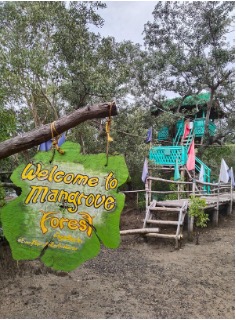
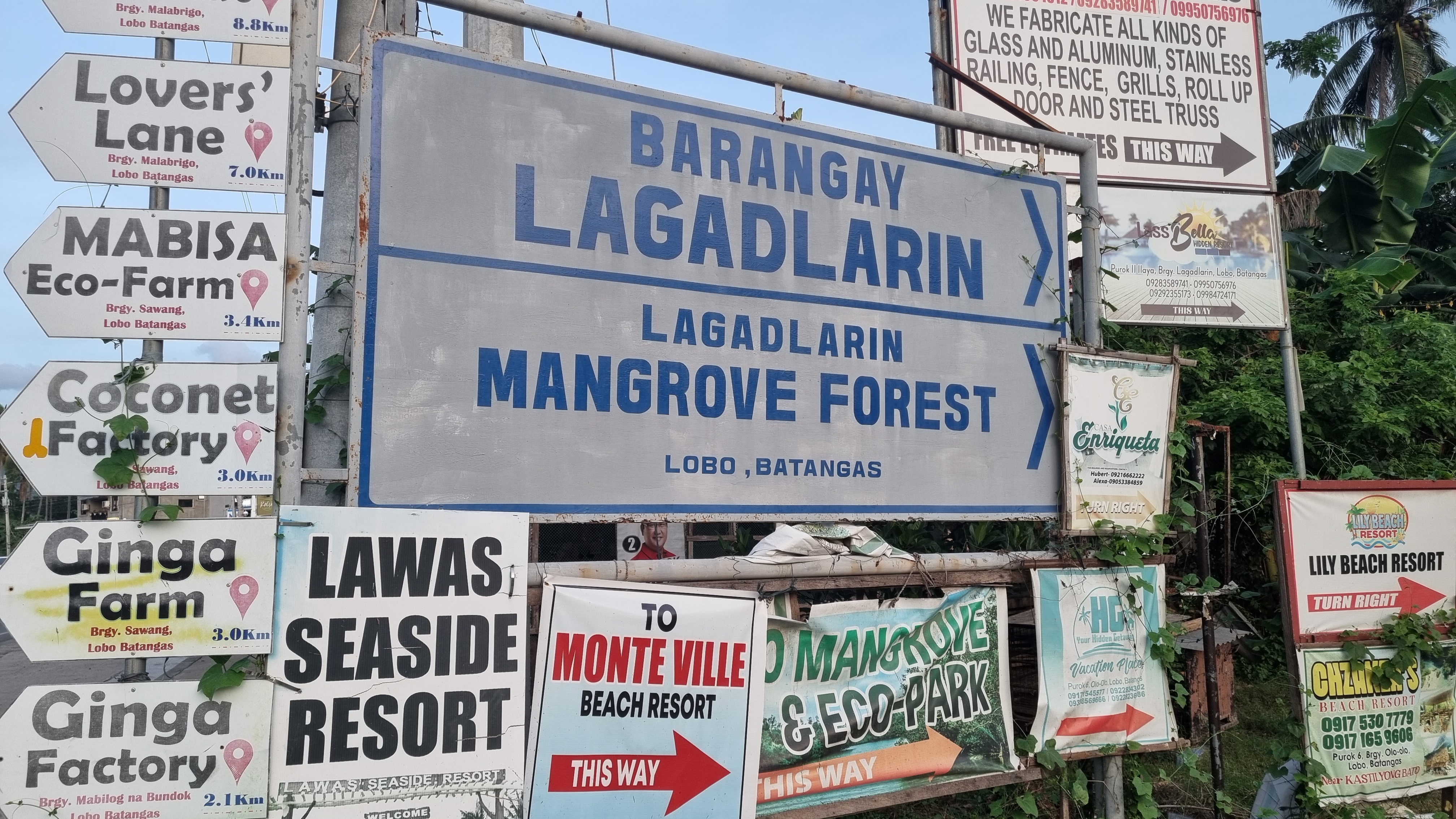
In Barangay Lagadlarin, in the municipality of Lobo, Batangas, a community-led initiative offers one such point of entry. The organisation at the centre of this effort is the Samahan ng Maliliit na Mangingisda sa Pangangalaga ng Kalikasan sa Barangay Lagadlarin (SMMNPKBL), a group composed largely of local women who have taken on the stewardship of a mangrove ecosystem that has become both an ecological asset and a site of collective organisation.

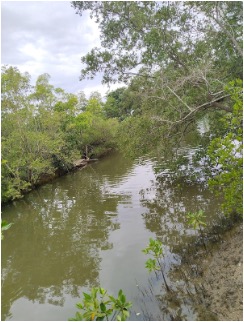
The mangrove forest they manage covers roughly thirty hectares and is notable not only for its size but for its diversity, containing a significant proportion of the true mangrove species found in the Philippines. In ecological terms, it functions as a nursery for fish, a buffer against coastal erosion, a shield against storm surges, and a store of blue carbon. In social terms, it is a source of livelihood, as well as a focal point for community activity.

The origins of this initiative are not rooted in a formal programme or externally driven project. They can be traced to a local decision in 2014, when the punong barangay who was himself a fisher – began to demarcate a path through the mangrove area. The intention was simple: to encourage residents to see the mangrove forest not as an unused or peripheral space, but as something worth protecting and maintaining.

What followed was not immediate transformation, but a gradual process of participation. Residents joined in maintaining the pathway and started discouraging destructive and illegal practices of cutting mangrove trees for charcoal making. The barangay invested in an elevated walkway. Over time, what began as a conservation effort took on an organisational form. The group that would become SMMNPKBL emerged from this process, drawing in members who were already embedded in the local economy – many of them women engaged in fish processing, vending, and household management.

Images by Meng Abarquez and F. Perez

The shift from informal participation to organised activity did not happen in isolation from changing environmental conditions. Declining catch and increasing variability in fisheries meant that the connection between the  health of the mangrove ecosystem and livelihood became more difficult to ignore. For those whose income depended on daily catch, the consequences were immediate. In this context, mangrove conservation was not framed as an abstract environmental concern. It was tied to the question of whether livelihoods could be sustained at all.

SMMNPKBL’s activities expanded accordingly. The group established a mangrove nursery, producing seedlings that could be sold to government agencies, private companies, and individuals required to participate in  reforestation activities. They developed small-scale tourism facilities, including cottages and guided access through the mangrove area. They organised maintenance of the walkway and coordinated with local authorities on conservation-related matters.

These activities generated income, though not without limitations. A portion of the revenue from seedlings and services is retained by the organisation for maintenance and reinvestment, while the remainder is distributed among active members. At the same time, entrance fees to the mangrove eco-park are collected by the municipal government and the barangay. The organisation itself does not receive a share of these entrance fees, despite being responsible for the upkeep of the site. Their project of mangrove forest conservation and marine eco-park has won environmental conservation awards, but they never get a share of the prize money from the local government.

This arrangement is not presented locally as a point of conflict. It is, however, indicative of a broader pattern. The labour of conservation is organised at the community level. The formal channels of revenue collection are structured through local government. Recognition of the organisation’s role exists, but the alignment between responsibility and financial return remains partial.

What is more immediately visible is the way in which the organisation has altered the dynamics of participation and governance within the barangay.

Women, who are often positioned at the intersection of livelihood management and household decision-making, have become central actors in the stewardship of the mangrove forest. Their involvement extends beyond routine maintenance. It includes coordination with visitors, engagement with local authorities, and participation in discussions about resource use.

This shift has subtle but important implications. It broadens the scope of what is considered part of resource governance. Discussions that might otherwise focus narrowly on fish catch or enforcement begin to include questions of household stability, future livelihood options, and the long-term condition of the ecosystem. In this sense, the organisation does not simply implement conservation activities, but rather it reshapes how those activities are understood.

From the perspective of adaptation theory, these developments begin to approach what has been described as transformative adaptation (Pelling, 2010; Ziervogel, 2021). There is a discernible change in how environmental services and their limits are perceived, in how responsibilities are organised, and in how practices are sustained over time.

Yet it would be misleading to suggest that Lagadlarin represents a complete transformation.

The scope of the organisation’s influence remains largely within the barangay and, to some extent, the municipality. The mangrove area they manage is significant, but it is only one part of a much larger ecosystem. The conditions affecting fisheries, their livelihoods and their lives – currents, water quality, regional fishing pressure, and industrial activity – extend beyond their reach.

Financially, the organisation operates within tight constraints. While it generates income, it does not control the larger revenue streams associated with tourism or environmental fees. Access to national-level climate finance mechanisms, such as the People’s Survival Fund (PSF), remains limited by procedural requirements and administrative capacity.

Institutionally, the systems within which they operate remain fragmented. Monitoring of coastal ecosystems is not standardised across municipalities. Data is not always shared. Enforcement varies from one jurisdiction to another. The alignment between local initiatives and provincial or national strategies is, at best, uneven.

These constraints do not negate what has been achieved. They define its limits. Lagadlarin is not an isolated success story. It is an example of how far community-level organisation can go within existing structures – and where it begins to encounter boundaries that cannot be addressed locally.

Those boundaries are shaped by the same factors that define the broader political economy of the Verde Island Passage.

Decentralisation has given local governments authority over coastal management and, in many cases, the ability to generate revenue from environmental fees. This has enabled innovation. It has also created a landscape in which incentives are tied to jurisdictional control. Municipalities that have invested in conservation may be reluctant to enter into arrangements that dilute their (fiscal) autonomy.

Climate finance mechanisms exist, but they are not easily accessed by communities or even by some local governments. The technical requirements for proposals, the need for coordination across agencies, and the limited availability of support for proposal development all contribute to a situation in which resources do not always reach the areas where they are most needed.

At the same time, development trajectories – particularly those related to energy infrastructure – continue to shape the ecological context in which communities operate. Decisions about LNG terminals, shipping routes, and industrial facilities are made at scales far removed from barangay-level governance. Yet their implications are felt locally.

Within this landscape, the question of scaling becomes more complex than simply replicating what works in one place.

It is not enough to ask whether other communities can adopt similar practices. The more difficult question is whether the institutional environment can support the expansion of such practices in a way that is coherent across the ecosystem.

Lagadlarin suggests that transformation can begin from below. It also suggests that without alignment above, such transformation risks remaining limited.

The issue is not the absence of initiative. It is the conditions under which initiative can accumulate into something more than a patchwork of localised responses.

This brings the discussion back to the question of scale – not only ecological scale, but institutional scale – and to the forms of coordination and negotiation that would be required to bridge the two.

Next: Part III – Governing at the Scale of the Ecosystem: Institutional Alignment and Political Choice

Part III: Governing at the Scale of the Ecosystem – Institutional Alignment and Political Choice

(Posted: 28 April 2026)

The experience of the Verde Island Passage shows, quite clearly, that climate adaptation does not occur in isolation. It takes shape within institutional arrangements that determine what can be done, by whom, and at what scale. As the discussion moves from individual and community responses toward the question of system-wide resilience, adaptation can no longer be treated as a stand-alone issue. It becomes inseparable from governance.

What stands out is not a lack of effort. Across the Passage, municipalities have established marine protected areas, enforced fisheries regulations, and engaged in Integrated Coastal Management initiatives. Communities such as Lagadlarin have assumed stewardship roles that extend beyond what might have been expected of local organisations. At the national level, policies are in place and financing mechanisms have been established. The institutional architecture exists, at least on paper. Yet, the sense of fragmentation remains.

This has less to do with gaps in activity and more to do with how ecological processes relate to institutional arrangements. The Passage functions as a connected system. Fish stocks decline across municipal boundaries. Ocean acidification, sea level rise, and temperature rise do not stop at administrative lines. Governance, however, continues to be organised along those lines. Authority is distributed across municipalities, provinces, and national agencies, each operating within its own mandates, incentives, and constraints.

At the level of individual municipalities, progress can be observed. A marine protected area may be effectively managed. Enforcement may be sustained. Community participation may be strong. But these gains do not necessarily extend beyond the boundaries within which they are achieved. Adjacent areas may operate under different priorities or levels of capacity. Monitoring systems are not always aligned. Data is collected, but not consistently shared in ways that allow for a system-wide understanding of conditions.

This is often where “coordination” enters the discussion. The problem is framed as one of improving coordination – creating platforms, enhancing communication, aligning plans. These steps are not unimportant. They address real gaps. But they do not fully account for the underlying dynamics that shape how institutions behave.

Local government units operate within a decentralised system that gives them authority over coastal management and, in many cases, access to revenue streams derived from environmental fees and tourism. These revenues are not incidental. They form part of local fiscal structures and, by extension, local political accountability. Municipalities that have invested in conservation and enforcement have done so partly because they are able to retain the benefits of those investments.

Seen from this perspective, the question of ecosystem-scale governance becomes more complicated. It is not simply a matter of aligning plans. It raises the issue of how benefits are shared.

Proposals to declare the Verde Island Passage as a protected seascape recognise the need for governance arrangements that better reflect ecological reality. At the same time, they bring into view concerns about revenue-sharing, authority, and control. For municipalities that have built their own systems, integration into a broader framework can be interpreted not only as an opportunity for coordination, but also as a potential loss of autonomy. This is not resistance to conservation. It is a response to how incentives are structured.

If governance at the scale of the ecosystem is to move beyond aspiration, these incentives have to be addressed directly. Creating coordinating bodies or mandating alignment will not be sufficient on their own. The more difficult question is how participation in such arrangements becomes viable for those who operate within them. This inevitably brings fiscal considerations to the centre of the discussion.

An ecosystem-scale framework would need to recognise existing investments made by municipalities while creating ways for benefits to be shared without undermining local revenue bases. This could involve pooled funds, performance-based transfers, or other arrangements that reward effective stewardship while supporting coordination. The specific design may vary, but the underlying principle is difficult to avoid: ecological alignment depends on fiscal alignment. Without it, coordination remains uneven and largely voluntary.

A similar pattern can be seen in relation to climate finance. The People’s Survival Fund was created to support local adaptation initiatives, reflecting a recognition that climate risks require dedicated resources. In practice, however, access to these funds has been limited. Requirements for proposal development, technical documentation, and inter-agency coordination create barriers that not all local governments can easily navigate.

For communities such as those in Lagadlarin, the existence of climate finance does not automatically translate into support. The gap is not simply administrative. It reflects a mismatch between how funding mechanisms are structured and how local adaptation processes unfold.

If climate finance is to contribute to scaling adaptation, it will need to engage more directly with these realities. This may involve identifying priority areas more proactively, supporting proposal development, and enabling multi-municipal initiatives rather than treating projects as isolated interventions. It also calls for a shift in how outcomes are understood – from discrete project outputs to contributions to system-wide resilience.

The question of accountability introduces another dimension. Environmental incidents, such as oil spills, make visible the limits of existing arrangements. Immediate responses tend to focus on containment and relief. These are necessary. They address urgent needs. But they do not necessarily alter the conditions that allowed such incidents to occur or that shape their impacts.

Communities affected by these events often receive assistance. At the same time, questions of liability, enforcement, and long-term remediation remain less prominent. Where relief consistently substitutes for accountability, the incentives for prevention may remain weak.

In a setting where industrial activity and ecological vulnerability coexist, governance cannot afford to treat these as separate domains.

This is where the broader development model becomes relevant. The expansion of energy infrastructure in Batangas is part of a national strategy, linked to decisions about investment, energy security, and growth. These decisions are made across sectors and levels of government. They do not sit neatly within the framework of coastal resource management.

Yet their implications are felt within the Passage.

For small-scale fishing communities, the relationship to these decisions is indirect. They do not determine where infrastructure is located or how it is regulated. They experience the consequences when ecological conditions shift or when disruptions occur. This asymmetry is part of the political economy of adaptation.

It is also where questions of climate justice take on a more immediate form. While climate justice is often framed in global terms—between countries that contribute differently to emissions and face different levels of risk—similar questions arise within the Passage itself. Who bears the costs of ecological degradation? Who benefits from development? Who participates in decision-making?

Fishing households, particularly those with limited alternatives, are directly exposed to environmental variability. Women, as noted earlier, often absorb these pressures within household economies. Industrial actors operate within broader regulatory frameworks that shape their responsibilities. Recognising these dynamics does not require adopting a single framework of justice, but it does require acknowledging that adaptation is not neutral. It redistributes risk and opportunity.

Returning to the question of scale, the experience of Lagadlarin can be read in this light. The organisation has shown that collective stewardship is possible and that local institutions can evolve. At the same time, it operates within a system that limits how far these efforts can extend.

Scaling such initiatives is not simply a matter of replication. It involves creating conditions in which similar forms of organisation can emerge and be sustained across different contexts, while also ensuring that they are connected to broader governance frameworks.

This is where the idea of governing at the scale of the ecosystem becomes more concrete. It does not imply a single authority controlling the Passage. Rather, it points to a set of arrangements through which different levels of governance – barangay, municipal, provincial, and national – can align their actions in ways that reflect ecological interdependence. It requires mechanisms for sharing information, coordinating enforcement, and aligning incentives, as well as processes for addressing disagreements.

None of this removes the need for political choice. Decisions about revenue-sharing, authority, and accountability involve trade-offs. Municipalities may weigh the benefits of coordination against the risks to their autonomy. National agencies may balance competing sectoral priorities. Industrial actors may respond to changes in regulatory expectations.

The movement toward coherence is unlikely to be straightforward. It will involve negotiation, adjustment, and, at times, contestation.

What the Verde Island Passage makes clear is that the alternative – continuing along a path of fragmented adaptation – carries greater risks. Efforts may continue and even expand. But without alignment, their cumulative effect may fall short of what is required to sustain the ecosystem and the livelihoods that depend on it, and to respond meaningfully to climate change.

The Passage remains a place of remarkable ecological richness. It is also a place where the limits of existing governance arrangements are becoming more visible. Whether it becomes a site of systemic resilience or of continued strain will depend on how these limits are addressed.

The challenge is not only to adapt to a changing environment. It is to organise governance in a way that recognises the interconnected nature of that environment, across scales and across institutions.

That is not a problem to be resolved once. It is an ongoing and difficult political process.
When Infrastructure Promises Collapse

And Their Corrosive Impact on the State

Renewable energy has been presented to Filipinos quite rightly as a response to several urgent and overlapping challenges: rising electricity prices, dependence on imported fuel, vulnerability to climate-related disasters, and persistent poverty. Solar and wind power, in particular, are framed as technologies that could democratise energy, create jobs, and strengthen national resilience.

These promises carry particular weight when viewed through the lens of climate justice—the expectation that climate action should reduce, rather than reproduce, existing inequalities, and that those least responsible for climate change should not bear the heaviest costs of response. A just energy transition follows from this logic. It is not only about shifting from fossil fuels to renewables, but about how that shift is financed, governed, and distributed: who benefits, who carries risk, and whether cleaner energy actually translates into affordable power and reduced vulnerability for ordinary households and communities.

It is in this context that the decision of the Department of Energy (DOE) in January 2026 to cancel a massive number of renewable energy service contracts—and to pursue roughly ₱24 billion in penalties and contractual obligations linked largely to one group of solar companies—takes on significance far beyond the energy sector.

This is not simply a story about a company that failed to deliver. It is a case study in how weaknesses in governance, oversight, and accountability can quietly drain public resources, weaken institutions, and undermine confidence in the country’s ability to manage highly technical infrastructure—whether in renewable energy, flood control, or other critical public systems such as water supply and national telecommunications. When this happens, it is the poorest and most vulnerable—those already facing climate shocks and high energy costs and those who are least able to cope—who ultimately bear the burden. In this sense, infrastructure failure becomes a climate justice issue.


A brief background and timeline

The rise of Solar Philippines
Founded in 2013, Solar Philippines rose rapidly during a period of strong policy support for renewable energy. It became one of the most visible developers of large-scale solar projects and positioned itself as a flagship of the country’s clean energy ambitions.

The grant of a national franchise (2019)
In 2019, Congress granted Solar Para sa Bayan Corporation a national franchise to develop and operate a distributed power system across the country. Such franchises are not routine. They confer extraordinary rights over critical infrastructure and are typically justified by demonstrated technical capacity, financial strength, and the ability to deliver power at scale in the public interest.

From the standpoint of a just energy transition, the granting of such a franchise represents a social contract: public authority and market privilege are extended on the expectation that real, timely benefits will accrue to consumers and communities. Questions were raised at the time—quietly but persistently—about whether a relatively young company had the institutional depth to meet such a critical need and high expectations. Those questions have become more pressing in hindsight.

Accumulation of service contracts and restructuring (2020–2023)
Between 2020 and 2023, Solar Philippines-linked entities accumulated a very large number of renewable energy service contracts under DOE programs, including the Green Energy Auction Program. These contracts granted exclusive rights to develop thousands of megawatts of capacity within defined timelines, backed by performance bonds and other contractual obligations.

During this period, assets were reorganised through listed vehicles such as SP New Energy Corporation (SPNEC), enabling capital entry and exit. Strategic investors—including ACEN Corporation and later Meralco-linked entities—acquired stakes through disclosed transactions. These developments are relevant not because these investors are accused of wrongdoing, but because they illustrate a deeper structural issue: climate-related finance and investment can move even when physical delivery and public benefit lag behind. When this happens, the promise of equitable climate financing—finance that is meant to deliver real social, developmental, and environmental outcomes—begins to erode.

Cancellations and enforcement (2024–2025; announced January 2026)
In 2024 and 2025, the DOE cancelled or accepted the relinquishment of nearly 17,900 megawatts of renewable energy service contracts nationwide. More than 11,000 megawatts—over 60 percent—were linked to Solar Philippines entities.

In January 2026, the DOE publicly announced that it was pursuing approximately ₱24 billion in penalties and contractual obligations related to these cancellations and that the matter had been referred to government legal offices for further action. Around the same time, the Office of the Ombudsman confirmed that it was examining alleged franchise-related violations involving a Solar Philippines firm.


Responsibility, finance, and public interest

Understanding this issue requires clarity about who is involved and in what capacity, because much of the public confusion stems from the overlapping—but not identical—roles of companies, regulators, investors, and political institutions. What follows is not a list of accusations, but a mapping of relationships in a complex governance and financing ecosystem.

Solar Philippines
Solar Philippines is a private renewable energy developer founded in 2013. It rose rapidly during a period of strong policy support for utility-scale solar and accumulated a large number of renewable energy service contracts issued by the Department of Energy (DOE). These contracts granted exclusive rights to develop solar projects within specific timelines, subject to performance requirements.

Solar Philippines did not require a congressional franchise to hold these contracts; its authority flowed primarily from executive-branch regulation. Over time, however, the sheer scale of contracts held by Solar Philippines–linked entities made the company central to national renewable energy planning, amplifying the public consequences of any failure to deliver.

Solar Para sa Bayan Corporation
Solar Para sa Bayan Corporation (SPBC) is a distinct corporate entity but is historically and strategically linked to Solar Philippines. Its defining feature is the national franchise granted by Congress in 2019, allowing it to develop and operate a distributed power system and sell electricity directly to end-users.

This franchise conferred public-utility–like privileges that go beyond ordinary project development. While SPBC and Solar Philippines are legally separate, they have long been understood—by policymakers, regulators, and the public—as part of the same corporate ecosystem pursuing complementary regulatory pathways: one through DOE service contracts, the other through congressional authority.

Leandro Leviste
Leandro Leviste is central to this story not because of personal allegations, but because of overlapping institutional roles. He is the founder and original public face of Solar Philippines and was closely associated with Solar Para sa Bayan at the time its franchise was granted. He is now a sitting member of the House of Representatives.

While franchises are granted to corporations rather than individuals, his leadership role and public association mean that questions about performance, delivery, and accountability inevitably reflect on him—particularly in a political economy where corporate identity and personal leadership are often closely intertwined. This overlap heightens the importance of transparency and institutional safeguards, even in the absence of any finding of wrongdoing.

SP New Energy Corporation
SP New Energy Corporation (SPNEC) emerged as a listed vehicle linked to Solar Philippines’ renewable energy assets. Through SPNEC, solar projects were aggregated, restructured, and opened to public investment. SPNEC later underwent ownership changes and has stated in official disclosures that it is not liable for penalties associated with Solar Philippines’ cancelled service contracts.

SPNEC’s role illustrates how financial instruments and listed entities can continue to function even as underlying project delivery encounters serious difficulty—a key issue in discussions of equitable climate financing and risk allocation.

ACEN (Ayala Group)
ACEN (Ayala Group), the renewable energy subsidiary of the Ayala Group, entered the picture as a strategic investor through disclosed transactions involving SPNEC. ACEN is not the subject of DOE penalty actions and is widely regarded as a technically capable and reputable renewable energy player.

Its involvement matters analytically because it demonstrates how large, credible capital can enter a project ecosystem after key public rights have already been allocated. This does not imply fault, but it complicates public understanding of responsibility and underscores the need for clear rules on how climate-related investments intersect with pre-existing regulatory obligations.

Meralco and Metro Pacific Investments
Meralco, the country’s largest power distribution utility, and Metro Pacific Investments Corporation (MPIC), a major infrastructure conglomerate, became relevant through later-stage corporate transactions and strategic positioning in the energy sector. Their involvement—directly or through affiliates—reinforced the perception that Solar Philippines–linked assets were being absorbed into the orbit of established power and infrastructure players.

Again, this does not suggest impropriety. But it highlights a structural issue: public-facing risks and obligations often remain with original developers or the state, while assets and opportunities can migrate toward larger, better-capitalised actors. For ordinary citizens, this dynamic contributes to confusion about who is accountable when projects fail.

Regulators, oversight bodies, and the public
The DOE is responsible for issuing, monitoring, and enforcing renewable energy service contracts. The Office of the Ombudsman examines potential administrative or legal issues involving public authority and public interest. Congress grants franchises and exercises oversight over the energy sector.

Finally, the public—especially electricity consumers and climate-vulnerable communities—bears the downstream consequences of failure: delayed power supply, lost public revenues, weakened state capacity, and diminished trust.


What went wrong? 

At its core, the problem is not complicated: power plants were promised but not built, at a scale large enough to disrupt national energy planning.

Service contracts are instruments through which the state allocates scarce development space and signals future supply. When a single group of companies holds a disproportionate share of those contracts and fails to deliver, the consequences extend well beyond that group.

Auction slots are locked up for years. Other capable developers—including smaller and more locally embedded actors—are crowded out. Energy supply projections must be revised. Consumers remain exposed to volatile prices and supply constraints.

From the standpoint of transformative adaptation, this represents a missed opportunity. Transformative adaptation requires more than incremental change; it involves reshaping systems and institutions so societies can cope with escalating climate risks in durable and inclusive ways. In the energy sector, this means diversifying actors, decentralising solutions, strengthening public learning institutions, and reducing systemic vulnerability. Large-scale non-delivery does the opposite: it reinforces concentration, fragility, and dependence on a narrow set of actors.

DOE officials have stated publicly that many projects failed to meet development milestones and did not adequately respond to notices issued by the department. Whatever the immediate causes—land access, financing constraints, technical limits, or over-extension—the outcome is the same: the public absorbs the cost.


Climate financing as a governance test

Climate finance is often discussed in terms of scale—how many billions are needed to fund energy transition and climate adaptation. But scale alone is not the core challenge. Governance is.

In principle, climate financing is meant to correct market failures, share risk, and enable transitions that would not otherwise occur—especially in countries facing fiscal constraints and high climate exposure. It is meant to support a just energy transition by lowering costs, broadening participation, and ensuring that climate action delivers tangible benefits to vulnerable groups.

What this case reveals, however, is how easily climate-related finance can become detached from those goals.

The accumulation of large renewable energy service contracts, followed by financial restructuring and capital transactions, created pathways for finance to move even as physical projects stalled. This does not automatically imply illegality. But it does point to a serious misalignment: finance responding to paper commitments rather than delivered infrastructure and public outcomes.

From the perspective of climate justice, this misalignment is deeply problematic. When climate finance rewards scale without delivery, it concentrates opportunity while socialising risk. Communities are left without power. Local governments lose expected revenues. The state loses fiscal and institutional space to invest in adaptation where it is most urgently needed.

Equitable climate financing cannot function under these conditions. It depends on strong public institutions capable of pacing investment, enforcing obligations, and ensuring that climate finance supports transformation rather than speculation.


The visible cost

The DOE’s estimate of roughly ₱24 billion reflects penalties, performance bonds, and contractual obligations associated with cancelled contracts. Whether this amount will be fully recovered remains uncertain and subject to legal processes.

But focusing only on this figure obscures a much larger cost—especially for a country seeking sustained access to climate finance for both mitigation and adaptation.


The even bigger hidden costs

The most serious damage caused by large-scale infrastructure failure is rarely captured in a single number.

Renewable energy projects that are not built do not pay local taxes, land rentals, or fees. They do not generate employment or secondary economic activity. For many local governments—particularly outside major urban centres—these revenues could have supported health services, disaster preparedness, and climate adaptation measures. Their absence deepens existing inequalities.

Renewable energy development requires sophisticated public systems: auction design, grid studies, contract management, and regulatory enforcement. When hundreds of projects collapse or stall, years of public investment in planning and oversight are effectively written off. Officials are diverted from learning and system improvement to managing disputes, litigation, and clean-up.

Following major failures, governments tighten rules. While necessary, this also raises transaction costs and slows future project development. More importantly, repeated failures undermine confidence among international climate funds, development partners, and responsible investors. The country’s credibility as a destination for equitable climate financing is weakened, just when long-term support is most needed.

Perhaps most damaging is the loss of trust. Investors become cautious. Financing costs rise. Citizens grow sceptical of government promises. This erosion of confidence weakens the social contract that underpins any credible just energy transition.

And a wider pattern

The renewable energy cancellations echo a broader and longer-running pattern visible in the country’s flood-control sector.

Over many years, tens of billions of pesos allocated for flood-control projects have been lost to substandard work, incomplete projects, or infrastructure that exists only on paper. These failures disproportionately affect poor and climate-exposed communities, turning what should be climate adaptation investments into sources of injustice and harm.

The connection between renewable energy and flood control is not technology—it is governance. In both cases, large sums of public money and climate-related financing were committed to technically complex infrastructure. In both cases, oversight proved insufficient to prevent large-scale non-delivery. And in both cases, the consequences extended far beyond individual projects: weakened institutions, drained budgets, and eroded public trust.

Of compounding effect

These failures do not occur in isolation. Flood vulnerability disrupts power systems. Weak energy systems slow economic recovery after disasters. Fiscal losses limit investment in both prevention and resilience.

In this way, infrastructure failures reinforce one another and amplify national vulnerability. They undermine the very conditions required for transformative adaptation—long-term planning, institutional learning, and inclusive decision-making.


A climate justice and development issue

Whether courts ultimately confirm wrongdoing in specific cases is important—but accountability matters even before legal outcomes are final.

Franchises, service contracts, and licenses are not private favours. They are instruments through which society entrusts private actors with public responsibilities tied to climate action and development. When those instruments can be accumulated, traded, and abandoned without proportionate consequence, the result is fragility, not progress.

From a climate justice perspective, weak accountability shifts the costs of failure onto those least able to bear them. From a development perspective, it corrodes the state’s capacity to govern.


Building a just transition

What, then, can be learned from this case—beyond memes and public accusations and counter accusations? Beyond immediate controversies and ongoing legal processes?

First, discipline in the allocation of public rights matters. Renewable energy service contracts and congressional franchises are not speculative instruments. They are public trusts. Granting them at scale without rigorous, ongoing verification of technical, financial, and organisational capacity invites failure—and shifts the cost of that failure onto the public.

Second, equitable climate financing requires strong state capacity. Climate finance is meant to correct market failures and support transitions that would not otherwise occur naturally or automatically. When governance is weak, however, climate-related finance can reward paper commitments rather than real delivery, concentrating benefits while socialising risks. This undermines both climate justice and long-term investor confidence.

Third, accountability must operate across institutions, not only through courts. Legal processes are essential, but they are slow and retrospective. Effective accountability also requires transparent disclosure, consistent enforcement of milestones, and credible consequences for non-delivery—regardless of political stature or corporate scale.

Fourth, transformative adaptation depends on institutional learning. Large-scale failures in renewable energy and flood-control infrastructure reveal the same underlying problem: the inability of public systems to learn, adapt, and correct course early. Without this capacity, climate responses remain reactive, fragmented, and unjust.

Finally, public trust is a form of national capital. When infrastructure promises collapse, trust erodes—not only in specific projects, but in the state’s ability to govern complex transitions. Rebuilding that trust requires more than new projects. It requires demonstrating that lessons have been learned, rules will be enforced, and public interest will prevail over short-term gain.

It is also important to be clear-eyed about expectations. While it is possible for private companies and investors to align with the aspirations of a just energy transition, equitable climate financing, transformative adaptation, and climate justice, it would be naïve to assume that these goals will naturally guide private decision-making. Private capital responds primarily to risk, return, and regulatory signals. The consistent pressure to ensure that climate action delivers fairness, inclusion, and long-term resilience has historically come not from markets alone, but from civil society, affected communities, and an informed public demanding more of both corporations and the state. It is this collective pressure that compels governments to craft development strategies, regulatory frameworks, and public investment priorities that are genuinely aligned with these broader ambitions.

There is, undoubtedly, much more to examine in the regulatory framework governing power generation in the Philippines—from market design and grid integration to pricing, competition, and system planning. A detailed assessment of these technical and legal dimensions, however, is not the primary aim of this piece. Rather, the analysis here is intended to underline a more fundamental point: that regulatory frameworks must be strengthened and applied consistently so they serve clearly articulated public goals as part of a whole-of-government, integrated, and coherent approach. These include sustainable development, climate justice, a just energy transition, equitable climate financing, and transformative adaptation—not merely the rapid scaling of capacity or the movement of capital.

A just energy transition, supported by equitable climate financing and oriented toward transformative adaptation, cannot be built on ambition alone. It rests on institutions that are credible, capable, and accountable. The real cost of failing to strengthen those institutions will not be measured only in pesos or megawatts, but in diminished capacity to protect the vulnerable and to lead the country through the intertwined crises of climate, energy, and inequality.

Without these guardrails, the energy transition risks becoming technically sound but socially hollow—delivering megawatts and financial returns while falling short of the justice, resilience, and transformation that climate action ultimately demands.


Author’s Note

This analysis is based on publicly available reporting, official statements, regulatory disclosures, and government announcements, including those issued by the Department of Energy in January 2026 and confirmations by the Office of the Ombudsman. Legal and investigative processes related to the matters discussed are ongoing. No findings of criminal liability are asserted in this piece. The purpose of the analysis is to examine governance, climate justice, equitable climate financing, and development implications in the public interest.

From Car-Centric Chaos to People-Centered Solutions

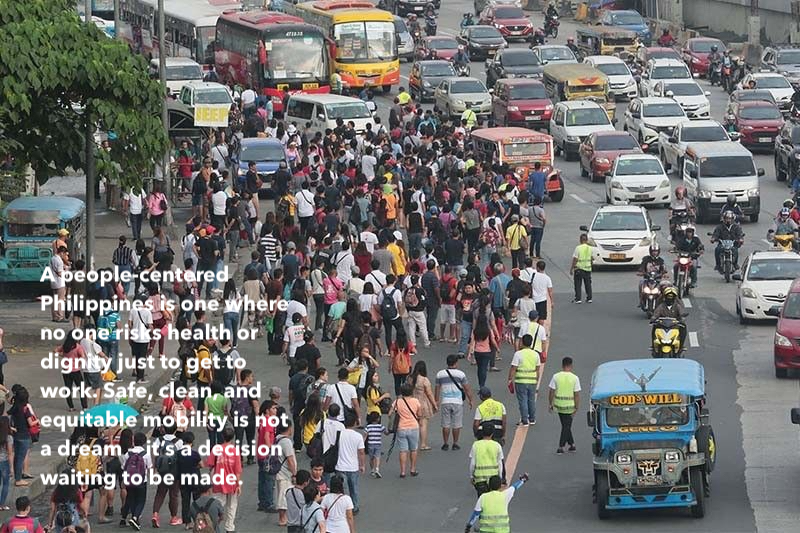
For millions of Filipinos, commuting is not a daily routine but a daily ordeal. Metro Manila’s congestion alone drains an estimated ₱3.5 billion every day in lost productivity, wasted fuel, and delays — a figure projected to rise to ₱5.4 billion per day by 2035 if no systemic changes are made (Japan International Cooperation Agency, 2018). These numbers, staggering as they are, tell only part of the story. What they fail to capture are the countless human costs: the exhaustion of workers who spend three to four hours a day in traffic, the health risks borne by commuters trapped in floods or under punishing heat, and the stress of children running after jeepneys or buses in unsafe streets. The economic cost is vast, but the social and human toll is deeper still.

Air quality magnifies the problem. Transport-related emissions make Metro Manila’s air among the dirtiest in the region, with ambient air pollution causing around 66,000 premature deaths each year nationwide and economic damages estimated at ₱2.2 trillion annually (World Bank; WHO, 2023). Public utility vehicles, though a fraction of the fleet, account for the bulk of black soot emissions along roads, contributing disproportionately to heart and lung diseases. The invisible poison of polluted air silently erodes the nation’s health and productivity, while noise, stress, and sleep loss compound the daily wear and tear on human bodies.

Citizenship

Commuters have too often been asked to endure the unbearable as though it were destiny: standing for hours in overcrowded buses, wading through flooded intersections, or breathing exhaust fumes at roadside terminals. These struggles have been normalized as the “Filipino way of life.” But citizenship cannot mean resignation. It must mean demand — demand for mobility that is safe, dignified, and accessible to all.

For children, this means safe passage to school without risking life and limb on chaotic roads. For women, especially those who are pregnant, it means being able to reach clinics without exposure to heat stress, floods, or air pollution that endangers maternal health. For the elderly and persons with disabilities, it means having sidewalks, crossings, and public transport systems that do not exclude them from economic and social participation. These groups are not marginal; they are central to society. Every time a child misses class due to unsafe transport, every time an elderly person is confined to their home, or every time a person with disability is denied mobility, society pays a cost. These costs may not appear in budget spreadsheets, but they are real: in wasted human potential, lost productivity, and higher health expenditures.

Citizenship in this context means not just coping but raising voices, organizing for safer streets, defending civic spaces for advocacy, and demanding accountability in how transport budgets are spent. Mobility, like health or education, is a right — and it must be claimed as such.

Governance

The roots of the crisis lie in governance choices that have long favored cars over people. In Metro Manila, cars account for less than 30 percent of daily trips yet consume more than 70 percent of road space (MMDA, 2019). Public funds are channeled into road widening and flyovers that benefit a minority of private car users, while public transport systems, pedestrian spaces, and bicycle lanes remain fragmented, unsafe, and underfunded. Year after year, pork-barrel politics and budget insertions inflate road-building allocations, while the modernization of jeepneys, the improvement of bus systems, and the creation of safe, green pedestrian and cycling networks are delayed or neglected.

These priorities are distorted not by necessity but by politics. Projects vital for the majority — such as safe, affordable public transport, dignified pedestrian access, or green open spaces — are either denied adequate budgets or sidelined in favor of more “profitable” undertakings, profitable not for citizens but for those who see them as easier channels for corruption. The consequences are passed on to commuters and drivers, who are forced to shoulder modernization costs on top of the taxes they already pay. Jeepney and PUV modernization, for example, is framed as a step toward cleaner and safer transport, but structured in ways that make drivers bear the brunt of expenses. Requirements to obtain new franchises or to join cooperatives in order to “access loans” or government support transform modernization into a political weapon. Instead of being instruments of inclusive progress, these projects become levers of patronage, partisan control, and financial burden — while the larger public continues to suffer through unsafe, unreliable, and polluting systems.

Reversing this pattern requires deliberate governance choices. Legislation and regulation must prioritize investments in reliable public transport, safe cycling networks, and walkable urban design. Emission standards must be enforced to protect public health. Flood management must be integrated into transport planning, recognizing that every monsoon paralyzes mobility. Above all, transparency in procurement and spending is essential so that billions intended for transport modernization are not siphoned away. Governance that is people-first recognizes mobility not as a privilege but as a public right.

Private Sector

The private sector is both part of the problem and part of the solution. The car industry, construction firms, and mall-based developments have shaped cities to favor automobiles and car-owning elites, locking in a cycle of congestion and pollution. Contractors, too, have profited from bloated road projects, often in collusion with politicians, while everyday commuters shoulder the cost in wasted time and declining health.

Yet the private sector also has the capacity to innovate. Employers can ease the burden on workers by supporting hybrid work and flexible hours, reducing the necessity of commuting every day through floods and heat waves. Property developers can design mixed-use spaces that minimize travel distances and integrate flood-resilient, walkable environments. Logistics and transport companies can invest in electric vehicles and cleaner fleets, reducing emissions and operating costs at the same time. By aligning their practices with sustainability, businesses can transform mobility into both a public good and a market opportunity.

The challenge is to move away from dependency on car sales and car-centric development toward innovation that supports people-centered, climate-resilient mobility. Just as collusion drains resources, innovation multiplies them.

From Car-Centric Chaos to Hybrid Futures

Around the world, cities have shown what is possible. Bogotá’s bus rapid transit has given commuters affordable, reliable mobility. Paris and Copenhagen have reallocated road space to bicycles and pedestrians, reducing both emissions and stress. Jakarta has experimented with car-free days, reclaiming streets for people. Even in the Philippines, the EDSA busway has shown that dedicated lanes can make commuting safer and faster when governance is firm.

But the future of mobility is not only about cleaner buses, wider sidewalks, or protected bike lanes. It is also about rethinking why, when, and how often people must travel. The pandemic proved that not every job or class requires daily presence. Hybrid work and study models — supported by community hubs with reliable internet, safe workstations, and childcare facilities — reduce demand on clogged roads and overcrowded vehicles. These arrangements are not luxuries; they are lifelines in a country where floods, extreme heat, and pollution make commuting hazardous. By cutting unnecessary trips, hybrid systems ease congestion, lower emissions, and protect health, while freeing up resources for those who must travel — nurses, drivers, factory workers, food vendors.

Linking transport reform with hybrid futures offers the clearest path out of car-centric chaos. It allows the Philippines to reclaim time, health, and dignity from the grip of traffic and smog.

Toward People-Centered Mobility

The chaos of Philippine transport is not inevitable. It is the outcome of choices that prioritized cars over people, profit over public good, and collusion over accountability. Yet just as choices created this crisis, different choices can end it. Citizens must refuse resignation and demand safer, more inclusive mobility. Governance must redirect resources from car-first infrastructure to people-first systems that serve the majority. The private sector must shift from dependency to innovation, aligning its growth with sustainable and equitable mobility.

The costs of congestion — the billions lost daily, the 66,000 premature deaths each year, the rising toll of road crashes — are already staggering. But layered onto these are the uncounted losses borne by children, pregnant women, the elderly, and persons with disabilities who are denied safe and dignified passage. These are not just deficits in equity and justice but real economic losses in health care costs, wasted productivity, and wasted human potential. Accounting for them makes the case for change even stronger.

Mobility and clean air are not luxuries. They are foundations of survival, health, and dignity. A Philippines that embraces people-centered mobility — tied to adaptable, hybrid work and study systems — can move beyond traffic and smog toward a future where everyone, regardless of age, gender, or ability, has the right to safe, healthy, and dignified movement.

Health and Climate Resilience

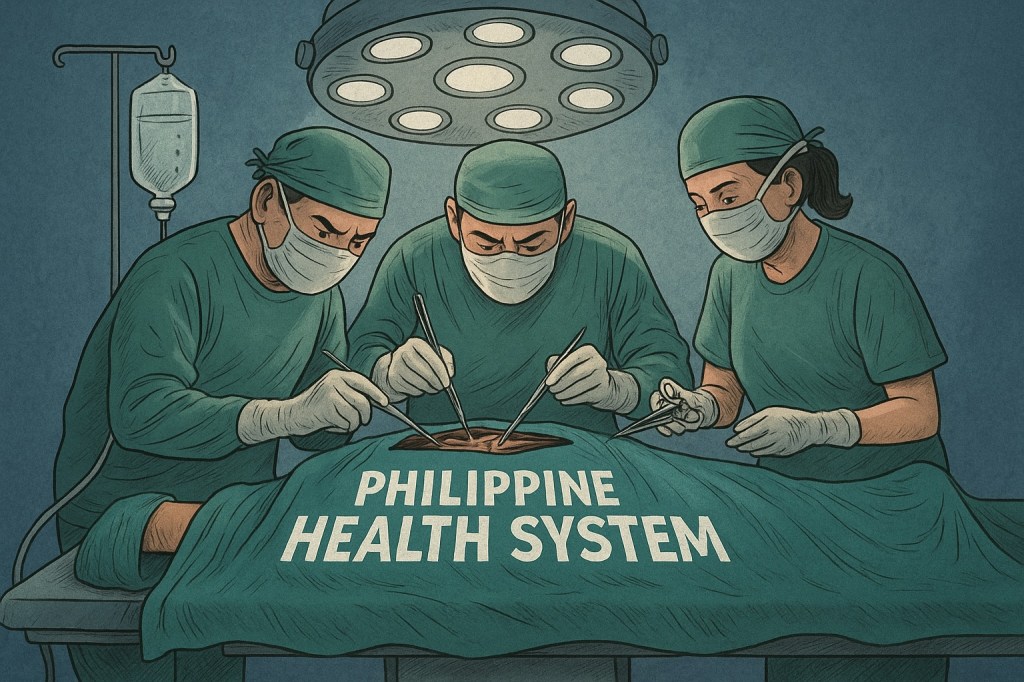
The COVID-19 pandemic was not only a public health emergency; it was a stress test that revealed the limits of the Philippine health system and the fragility of everyday survival for millions of families. Despite one of the longest lockdowns in the world, the country suffered more than 66,000 excess deaths in 2021 (Philippine Statistics Authority, 2022). Hospitals overflowed, health workers were pushed to their limits, and corruption in medical procurement further eroded trust in institutions that should have been the backbone of protection. Lockdowns were meant to contain the virus, but because so many Filipinos lived without savings or safety nets, people had little choice but to venture out in search of work. In the process, the virus spread more widely, and the economic and social costs mounted.

Yet the pandemic also offered lessons that matter for the future. Hygiene practices became widespread almost overnight. Community health workers proved indispensable in delivering basic services, often with little recognition. Families discovered the importance of nutrition, exercise, and shared responsibility for well-being. These shifts, however uneven, underscore that health resilience begins not in hospitals alone but in the cultural fabric of daily life. And this is where the story moves from pandemic to climate. The current normal of unseasonal storms, prolonged floods, and extreme heat waves is already compounding health risks. In 2023, the Department of Health recorded 513 cases of heat-related illness, while the first quarter of 2024 saw six heat-related deaths (DOH/CCC, 2024). Heat indices above 42 °C are now common in urban areas, placing students, commuters, and outdoor workers in danger (ABS-CBN, 2025). Floods continue to spread waterborne diseases such as leptospirosis and diarrhea, while mosquito-borne illnesses like dengue thrive in warmer, wetter conditions. Health and climate are no longer separate issues; they are part of a single, urgent struggle for resilience.

Citizenship: Shared Responsibility

The pandemic reminded Filipinos that health is not an individual pursuit but a shared responsibility. Communities quickly adapted to new hygiene habits, proving that cultural norms can shift when survival is at stake. Yet sustaining these practices requires more than fear of disease; it calls for citizens who see their own health as inseparable from that of their neighbors. Community clean-ups, sanitation campaigns, and vigilance against dengue are all forms of shared action that strengthen resilience at the most local level. Barangay health workers remain the unsung heroes of this effort — underpaid, under-equipped, but essential in linking households to the broader health system. Civil society organizations also play a critical role, defending public health budgets and demanding equitable access to care. When citizens organize, they transform coping into collective power, and resilience becomes not just survival but dignity.

Governance: Preventive Systems

The chronic underinvestment in Philippine health care has long been evident. At roughly 5 percent of GDP, health spending falls short of the 7 percent recommended by the World Health Organization for countries at the Philippines’ level of development. This leaves hospitals overcrowded, rural clinics understaffed, and laboratories under-equipped. During the pandemic, these weaknesses turned deadly, as reactive, crisis-driven measures failed to prevent thousands of avoidable deaths. Building resilience requires a different approach: one that invests in foresight rather than scrambling in response. Barangay health stations and municipal clinics must be expanded, laboratories equipped for early detection, and surveillance systems strengthened to monitor climate-sensitive pathogens — from dengue-carrying mosquitoes to waterborne bacteria and zoonotic spillovers from displaced animal habitats. The Universal Health Care Act of 2019 remains a promising framework, but it demands consistent funding and transparent implementation. Health must also be fully integrated into disaster risk reduction, so that every evacuation plan for floods or heatwaves includes sanitation, medical care, and continuity of services. Governance, in short, must move from reactive firefighting to preventive protection.

Private Sector: Profits, Common Good, and Market Growth

The private sector has often seen health as a narrow concern — workplace safety, employee wellness programs, and insurance coverage. Yet the pandemic blurred the line between workplace and community health, and climate change is erasing that line altogether. Companies cannot thrive in communities plagued by heat stress, dengue outbreaks, or constant flooding. Businesses have both a duty and an interest in treating public health as part of their mandate. Employers can provide cooling spaces and flexible work arrangements that protect workers during extreme heat. Developers can invest in urban greening — shaded walkways, green roofs, and pocket parks — that reduce urban heat islands while also enhancing livability. Agribusiness and food companies can strengthen surveillance of livestock and wildlife supply chains to reduce the risk of zoonotic diseases. And perhaps most crucially, corporations must abandon collusion in corruption that drains public resources, and instead align their investments with public health goals. When companies shift from seeing health as a cost to seeing it as a source of resilience, they contribute to the common good — and in the process, they strengthen the very markets on which they depend. From profits, to common good, to market growth: this must become the cycle of a sustainable economy.

From Pandemic Lessons to Climate Futures

There are models worth emulating. Cuba, despite its limited wealth, has built one of the world’s most resilient health systems by focusing on prevention and community care. Thailand, through its Universal Health Coverage reforms, demonstrated that even middle-income countries can achieve broad, equitable access to health. Medellín in Colombia reduced urban heat and improved public health simultaneously by creating “green corridors” — an integrated approach that Philippine cities could readily adapt. And closer to home, Marikina has shown how disaster response can be health-centered, Iloilo has rehabilitated its riverbanks to reduce disease risks and improve urban space, and barangay health workers across the country have demonstrated resilience against all odds.

The pandemic revealed the costs of a health system that is underfunded, reactive, and corrupt. Climate change is now amplifying those risks, ensuring that floods, storms, and heatwaves will increasingly shape the health of the nation. Building resilience is not optional; it is survival. It begins with citizens who treat health as a shared responsibility, continues with governance that invests in prevention rather than reaction, and extends to a private sector that recognizes public health as both duty and opportunity. The lesson of the pandemic is clear: resilience is not simply bouncing back. It is transforming the very systems that failed — so that they do not fail again in the face of the next crisis.

Building Resilience Beyond Sandbags and Scandals

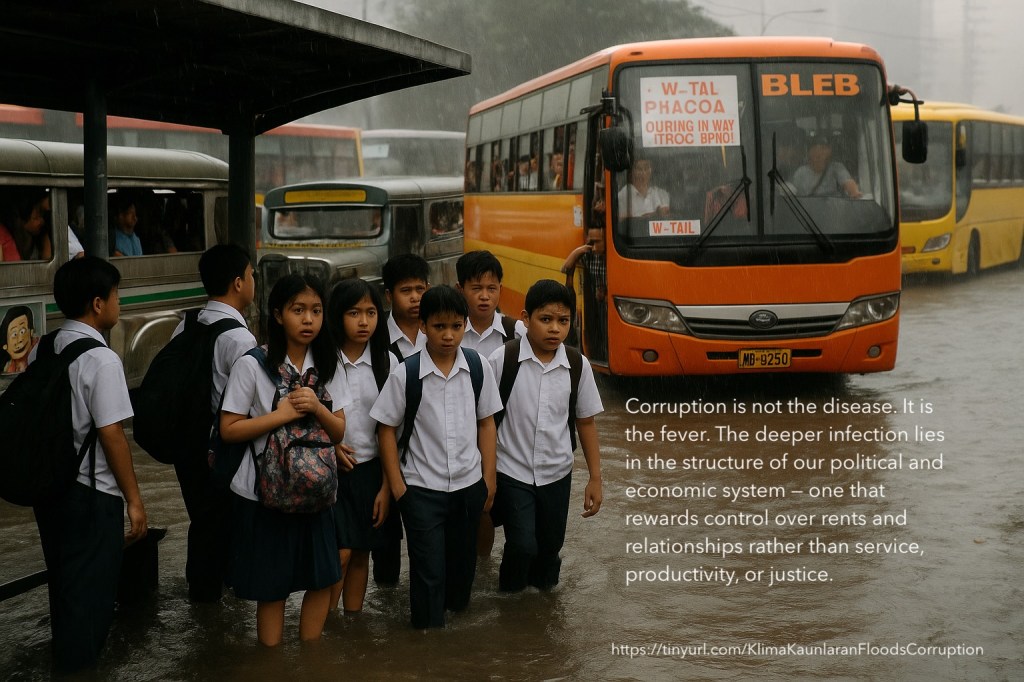
Every rainy season, Filipinos brace themselves for the same ordeal: flooded streets, stranded commuters, classrooms turned into evacuation centers, and homes filled knee-deep with murky water. According to the World Bank, more than 14 million Filipinos are exposed to flooding each year, with damages averaging ₱133 billion (≈US$2.4 billion) annually in lost assets, livelihoods, and productivity (World Bank, 2022).

Climate change is already magnifying this threat. PAGASA projects that extreme daily rainfall events will become more frequent, particularly in Luzon and the Visayas. At the same time, sea levels around the Philippines are rising at nearly double the global average — between 5.7 and 7.0 millimeters per year — making coastal flooding more frequent and destructive (World Meteorological Organization, 2023; PAGASA). Combined with rapid urbanization, clogged drainage systems, and the spread of informal settlements into floodplains, the current normal of yearly floods will only worsen unless the country embraces systemic change.

Citizenship and Culture: Demanding Change

For decades, citizens have been expected to “cope” with floods by stacking sandbags, raising furniture, or wading through waist-deep water. These coping mechanisms, repeated year after year, normalize disaster and shift responsibility to households that are often the least equipped to manage it. Resilience, however, must go beyond individual sacrifice.

True citizenship in the face of flooding means demanding transparency in how flood control budgets are spent. Billions of pesos are inserted into the General Appropriations Act every year for flood control projects, yet many are poorly built or never completed at all, as the Commission on Audit has repeatedly flagged. Civic groups, barangay councils, and homeowners’ associations can serve as watchdogs, pushing back against the entrenched culture of “budget insertions” that fuels corruption. At the same time, culture itself matters: reducing household waste that clogs drainage, participating in greening efforts, and embracing resilience as a shared responsibility all help ensure that solutions are not purely technical, but also social and cultural.

Floods are not inevitable acts of fate. They are failures of planning, governance, and accountability. Citizens have both the power and responsibility to demand more.

Governance: Protection

The governance failures in flood management are glaring. Between 2022 and 2024 alone, the government allocated ₱545 billion for flood control projects, yet many of these projects were later flagged as substandard, overpriced, or even non-existent (Reuters, 2025). Each year, the National Expenditure Program is transformed into the General Appropriations Act through budgetary “insertions” that inflate flood control allocations well beyond technical needs. Instead of protecting citizens, these projects too often become conduits for political patronage and private gain.

Shifting from pork to protection requires a new governance framework. Legislation must establish climate-resilient infrastructure standards, mandating underground floodwater reservoirs, expanded drainage networks, permeable pavements, and the integration of green infrastructure in all new developments. Urban planning must adopt a landscape approach that respects natural waterways, wetlands, and river basins, rather than building over them. Independent oversight bodies such as the Commission on Audit and the Ombudsman must be empowered to prosecute ghost projects and penalize both officials and contractors engaged in corruption. Finally, relocation and housing strategies must prioritize the poor, ensuring that informal settlers are not simply evicted from flood-prone areas but offered dignified, safe alternatives.

Without accountability and foresight, even the most sophisticated engineering projects will fail. Flood control must no longer be treated as a political prize but as a public necessity.

Private Sector: Innovation

The private sector occupies a complicated space in the story of floods. On the one hand, construction firms and contractors have too often been complicit in overpricing, license-renting, and ghost projects, benefiting from the very corruption that undermines public resilience. On the other, businesses also possess the expertise, technology, and resources that could drive innovative solutions.

For the private sector to shift from collusion to innovation, it must refuse participation in corrupt bidding schemes and commit to integrity in procurement. Developers can incorporate flood-resilient designs, including underground cisterns, elevated foundations, and permeable surfaces that reduce runoff. Partnerships with government could expand drainage systems, establish rainwater harvesting schemes, and invest in wastewater reuse, turning floodwater from a hazard into a resource. More fundamentally, businesses must see resilience not as a burden but as a market opportunity. Companies that lead in climate-resilient infrastructure will not only protect communities but also open new domestic and international markets. The cycle must change: from profits alone, to public good, and back again to market growth.

Learning from Models Abroad

The Philippines does not need to invent solutions from scratch. Other countries have faced similar threats and built models worth adapting. In Tokyo, the Metropolitan Area Outer Underground Discharge Channel is a vast system of tunnels and tanks that capture excess floodwater during storms. While prohibitively expensive at full scale, smaller underground cisterns beneath parks or intersections could be piloted in Manila or Cebu. In Singapore, the Marina Barrage functions as both a tidal barrier and a freshwater reservoir, while also serving as public space — a model of how infrastructure can combine resilience with livability. The Netherlands’ “Room for the River” program restores floodplains and wetlands, proving that giving rivers more space can sometimes be more effective than raising dikes. Bangkok’s “Monkey Cheek” reservoirs, where urban parks double as floodwater retention basins, offer a low-cost solution particularly relevant for dense Asian cities.

Philippine Pilots: Proof It’s Possible

Encouragingly, there are also homegrown examples that show resilience is possible when governance and citizen action align. Marikina City has developed a community-based flood warning system that provides real-time alerts, saving lives during typhoons. Iloilo has rehabilitated its river through mangrove replanting, clean-ups, and strict zoning enforcement, transforming a once-polluted waterway into a model of flood mitigation and urban renewal. Cebu has piloted rainwater harvesting systems in schools and barangays, demonstrating how small-scale innovations can reduce both flooding and water scarcity. Naga City has integrated participatory governance into its disaster planning, ensuring that citizens themselves are partners in shaping resilience strategies.

These local cases prove that innovation and accountability can make a tangible difference. The challenge lies in scaling them up and protecting them from the corruption that undermines so many other efforts.

Toward Flood-Proof Cities

Floods will never disappear entirely in a tropical archipelago like the Philippines. But the devastation we experience today is not inevitable. It is the result of political choices — to treat flood control as pork, to build on natural waterways, to neglect drainage, and to collude rather than innovate.

The path forward is equally a matter of choice. Citizens must refuse to normalize disaster and instead demand transparency. Governance must redirect flood control spending from patronage to protection. The private sector must move beyond collusion and embrace innovation as both duty and opportunity. And the Philippines must draw lessons not only from Tokyo, Singapore, the Netherlands, and Bangkok, but also from its own successes in Marikina, Iloilo, Cebu, and Naga.

Adapted, scaled, and protected from corruption, these models can move the country beyond sandbags and scandals — toward cities that protect lives, livelihoods, and dignity in the face of a changing climate.