READING THE CURRENTS

The Philippines’ Strategic Window in the Energy and Critical Minerals Transition

Part I – It would be a mistake to read the disruption around the Strait of Hormuz simply as another geopolitical crisis affecting the price of oil. Energy security has never really been just about price. It is about physical infrastructure, geography, political alliance, and who controls the systems through which energy actually moves. Since the United States and Israel struck Iran in late February 2026, Iran has mined the strait’s approaches and attacked merchant shipping, cutting oil and petroleum flows through the passage by nearly 30 percent in the first quarter of the year (Institute for Energy Research, 2026). Before the war, close to a quarter of the world’s seaborne oil and a fifth of its liquefied natural gas moved through this one channel (International Energy Agency, 2026). There is no infrastructure built to carry that volume anywhere else.

While the world worries about oil and gas, a second energy story has been gathering momentum more quietly. As transport, industry, and power systems electrify, the strategic importance of minerals grows with them. Batteries need nickel, cobalt, lithium, manganese, and graphite. Electricity grids need enormous quantities of copper. Renewable energy systems need copper, nickel, rare earth elements, and other specialised materials. Semiconductors and advanced technologies depend on still more of them. It is no longer only who controls the oil and gas that matters. Increasingly, the strategic question is who controls the minerals, the processing capacity, and the electricity needed to turn those minerals into the technologies the next economy will run on.

It is easy to underestimate China’s position in that processing stage. It is the leading refiner for nineteen of the twenty minerals the International Energy Agency tracks as strategically important, with an average global market share around 70 percent (International Energy Agency, 2025). For rare earths, China mines roughly 60 percent of world supply but refines around 91 percent of it. For lithium, nickel, and cobalt, it often mines only 10 to 30 percent of global supply yet still refines 60 to 70 percent (Belfer Center for Science and International Affairs, 2025). Ore dug up almost anywhere in the world usually still passes through a Chinese refinery before it becomes a usable input. This is why Western industrial policy has begun paying a deliberate premium for minerals refined elsewhere, in countries considered geopolitically aligned. It is also why the Philippines, historically a minor character in this story, deserves a closer look.

A Broader Mineral Base Than the Nickel Headlines Suggest

Nickel is the obvious place to start, and the figures are genuinely striking. The Philippines is the world’s second-largest producer of mined nickel, accounting for roughly 10 percent of global output and holding about 10.5 percent of known reserves, third-largest in the world (Philstar, 2025). It is the largest exporter of raw nickel ore outright, sitting on an estimated $170 billion in deposits, with processing potential identified in Zambales, Surigao, Dinagat, and Palawan (US International Trade Administration, 2025).

But nickel is only part of the picture. Copper deserves considerably more attention than it usually gets: the Philippines holds an estimated four billion tons of copper ore, placing it among the world’s more significant copper-reserve holders, and Philippine Statistics Authority data shows the country’s Class A copper reserves rose almost 22 percent in 2024 alone (Philippine Statistics Authority, 2025; Vantage FDI, 2025). Copper may end up mattering more than nickel as electrification accelerates, since grids, transmission lines, motors, and charging infrastructure are all copper-intensive in a way few other applications are.

Cobalt is the mineral most worth adding to the conversation, precisely because it sits alongside nickel and lithium in every one of the refining statistics above. Philippine nickel operations already produce mixed nickel-cobalt sulphide, since cobalt is commonly recovered as a by-product of nickel and copper processing rather than mined on its own (Vantage FDI, 2025). That makes nickel, copper, and cobalt a genuinely linked story rather than three separate ones — a single processing chain that, if built out, could yield more than one strategic mineral from the same investment.

The country is also a significant gold producer, and gold actually overtook nickel as the largest single mineral export by value in 2024, generating roughly ₱126 billion from under 29,000 kilograms produced (Chambers and Partners, 2026). Gold is not a critical mineral in the same sense as nickel or copper, and its connection to the energy transition is modest – mainly through its use in electronics and chip packaging – but it remains a large part of the country’s overall mineral wealth and is commonly recovered alongside silver in the same operations. Gold’s renewed significance as a reserve asset amid the broader wave of central bank accumulation now underway worldwide gives this endowment an added dimension worth noting. Managed well, it is a resource that could help finance, or itself be held against, the country’s own ambitions in minerals processing and recycling, rather than one whose relevance ends at the export ledger. Chromite, concentrated in Eastern Samar and Zambales, is smaller still, used mainly in stainless steel and alloys rather than batteries, but its reserve value more than doubled in 2024 off a small base and it rounds out a genuinely diversified resource picture (Philippine Statistics Authority, 2025).

The more speculative but interesting addition is rare earth elements. The Philippines is not yet a producing country, but geologists have identified three distinct types of deposit: ion-adsorption clays in Palawan, bauxite-hosted rare earth mineralisation on Samar, and scandium-bearing nickel laterites in Zambales, with grades at some sites comparable to cut-off grades used in southern China’s rare earth industry (Rare Earth Mining, 2026). In February 2026, the Philippines signed a critical minerals memorandum with the United States at a ministerial meeting attended by more than fifty countries and the European Commission, explicitly citing the country’s rare earth potential among the reasons for the partnership (Philippine News Agency, 2026b). Given how central China’s rare earth dominance is to the argument above, this is a thread worth pulling rather than leaving aside. There is a further, less obvious connection worth naming: high-purity silica sand and quartz, the literal feedstock for silicon wafers, are also present in the Zambales and Tarlac area now central to the country’s semiconductor ambitions. The mineral that gives the wider Pax Silica initiative its name is, in a very direct sense, one the Philippines is now being asked to help supply.
The Real Bottleneck Is Electricity, Not Geology

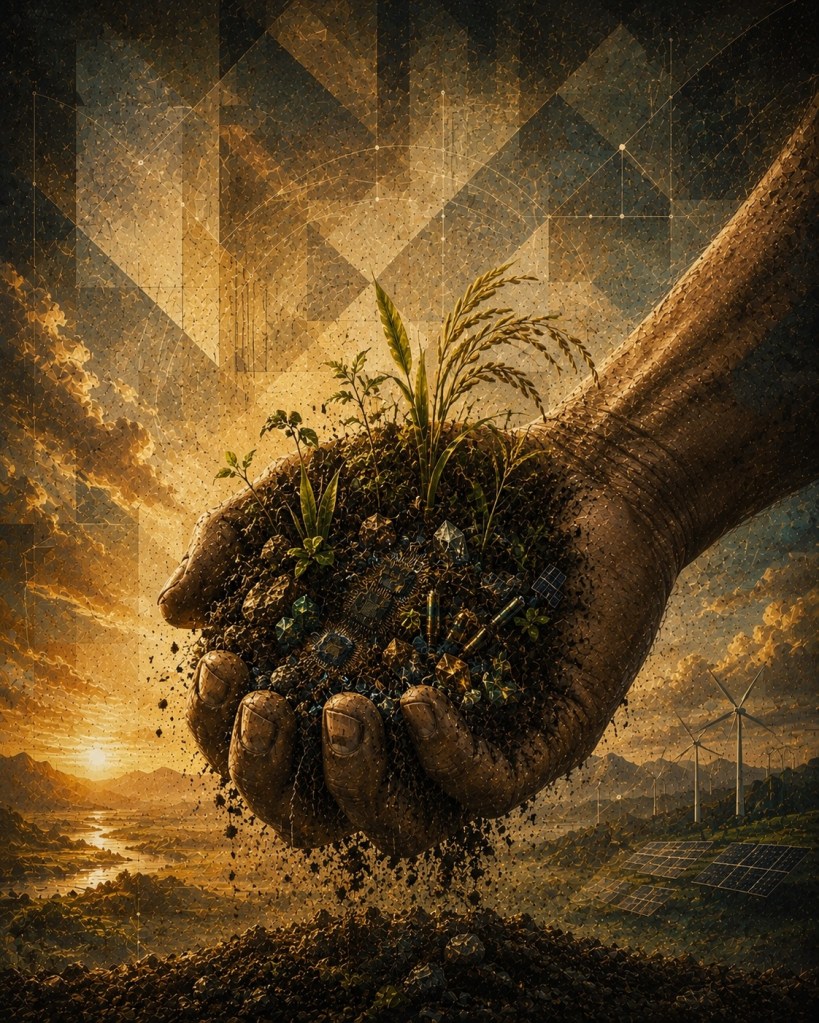
Mining ore is only the first step. The real economic value sits further along the chain –  concentration, smelting, refining, processing, and eventually manufacturing – and every one of those stages needs electricity that is not just available, but also reliable and competitively priced. So the country holds minerals the global energy transition increasingly needs, and it has considerable renewable energy potential of its own, but it needs affordable, reliable, and increasingly clean power to process the very minerals that will build the world’s clean energy economy. Where electricity remains expensive or carbon-intensive, Philippine processors will keep losing out to processing centres elsewhere, however rich the deposits underneath them.

It follows that mining and renewable energy should not be treated as separate sectors. They are increasingly parts of the same emerging industrial system. Clean power enables mineral processing; mineral processing creates demand for reliable power; and domestic processing, in turn, creates demand for engineering, logistics, fabrication, maintenance, and finance.

Policy Has Started to Catch Up

In December 2025 the United States convened the founding summit of Pax Silica, a coalition that has grown from seven founding members to more than twenty by mid-2026, built around securing semiconductor, artificial intelligence, and critical-mineral supply chains outside China (Philippine News Agency, 2026a; Rappler, 2026a). The Philippines joined in April 2026 as the coalition’s thirteenth member and, by July, had become host to one of its flagship projects: a roughly 1,620-hectare industrial hub at New Clark City, Tarlac, described as the first “AI-native” zone under the initiative (Philippine News Agency, 2026a; Avasant, 2026). Government officials have stated plainly that the purpose of the hub is to keep critical minerals processed within the country rather than exported raw (GMA News Online, 2026) – precisely the value-chain problem described above, now stated as deliberate national policy rather than left to individual firms to solve unassisted. Government estimates put the expected investment at up to $70 billion and direct employment as high as 190,000 jobs (Rappler, 2026b).

It is a signal that governments are starting to think differently about the relationship between economic security, technology, energy, and mineral supply chains, and the Philippines has, for the first time, positioned itself inside that thinking rather than outside it. But a signal and an opening are not the same thing as a settled outcome, and that opening deserves scrutiny.

The Concerns Deserve a Fair Hearing

Large industrial and strategic projects of this kind have drawn legitimate, organised concern from several directions, and none of it should be waved aside as reflexive opposition to development. Environmental and Indigenous rights organisations have warned about the potential displacement of thousands of residents and farmers, unresolved ancestral land claims, and stress on the watershed the hub depends on (PhilSTAR Life, 2026). Farmer groups have raised similar concerns about land and livelihoods, and there have been public calls for the consent process to be genuine and independently verifiable rather than asserted after the fact (Inquirer.net, 2026b). Some legislators have questioned whether the arrangement deepens dependence on a single foreign power behind a development label. The most detailed challenge has come from the Makabayan bloc, which filed House Resolution 1128 in June demanding the government disclose “all legal instruments, binding commitments, and operational details” tied to the project (Politiko, 2026). That demand has since broadened well beyond one bloc. House minority members led by Edgar Erice and Leila de Lima filed a separate resolution in August seeking a congressional inquiry into the agreement’s implications for sovereignty and security (Manila Times, 2026b), and in the Senate, both Raffy Tulfo and Imee Marcos have pushed for their own investigations into the deal’s economic, environmental, and national-security dimensions (Ground News, 2026). Kabataan Rep. Renee Co has separately warned that the initiative could accelerate extraction of high-purity silica sand and quartz in Zambales and Tarlac — the very feedstock the hub’s own semiconductor ambitions depend on — at the expense of local communities and farmland (Manila Times, 2026a). Economists and researchers have questioned whether the government’s job figures conflate temporary construction work with permanent, higher-value roles, and whether the more skilled technical positions will actually go to Filipino workers rather than to expatriate staff (Rappler, 2026b).

The government’s and project proponents’ responses deserve equal specificity rather than being set aside alongside the criticism they answer. Officials have stated that the project will draw no water from communities or groundwater, relying instead on rainwater harvesting sized to a capacity BCDA says exceeds projected demand (Inquirer.net, 2026c), though an independent estimate puts demand at roughly 130 million litres a day – above that stated capacity range (Inquirer.net, 2026a). They have noted that a substantial share of the wider economic zone’s land has already been allocated to Indigenous groups, and that the specific project site has been earmarked for industrial use since the relevant development authority’s founding legislation more than three decades ago (Inquirer.net, 2026c). They have also characterised the initiative as industrial and technological rather than military in nature (Avasant, 2026).

None of the responses above address a separate question: the carbon cost of the processing shift the initiative is built around – less visible in the public debate so far than land, water, and sovereignty questions. The Philippines has historically exported over 90 percent of its nickel ore raw to China, which absorbs the emissions-intensive smelting and refining stage offshore (Philstar.com, 2026). Ending that arrangement, which officials have stated is the explicit intent of the hub, means bringing that stage onshore for the first time at scale. Indonesia offers the closest comparator, since it processes the same laterite ore type, and the experience is not encouraging: nickel smelting there, run largely on captive coal plants built specifically to serve industrial parks disconnected from the national grid, accounts for nearly 98 percent of the sector’s emissions, with the country’s four largest processors on track to add close to 39 million tonnes of CO2 equivalent annually by 2028 – roughly 4.5 percent of Indonesia’s total national emissions from processing alone (WRI, 2026; IEEFA, 2024). The outcome is not fixed by the ore itself. Vale’s Sorowako facility, powered by hydropower rather than coal, runs at less than half the sector’s average carbon intensity, which indicates the power source is the determining variable, not the mineral chemistry (IEEFA, 2024). The Philippines holds a structural advantage here that Indonesia’s remote, grid-disconnected nickel belt never had – established geothermal capacity that could in principle power New Clark City’s processing without reproducing Sulawesi’s captive-coal model. Whether that advantage gets used is a matter still open to negotiation in the framework agreement, not a fact already settled by geology or by government assurances offered so far.

The sensible position is neither automatic opposition nor automatic endorsement of either side. Proponents and critics are both making specific, checkable claims – on water, on land, on jobs, and now on carbon – and the more useful exercise is asking what would actually verify each of them. The carbon question is arguably the one furthest from being checkable at this stage, since it depends on a power-source and technology choice not yet made public, let alone locked into the framework agreement. What would need to be true nationally, not just project by project, is that the Philippines uses this moment of genuine negotiating leverage – before signatures, not after – to make renewable power a binding condition of onshore processing rather than an aspiration announced once construction is already underway.

Part II turns to the other half of this picture – where the investment opportunity actually sits, and what would have to change institutionally for it to become genuinely shared development rather than a faster version of the extraction the country already knows.

References

Avasant (2026) Pax Silica and the Philippines: What the New Economic Security Zone Means for Global Supply Chains.

Belfer Center for Science and International Affairs (2025) Critical Minerals Explained: Why They Matter for Geopolitics, Clean Energy & Tech. Cambridge, MA: Harvard Kennedy School.

Chambers and Partners (2026) Mining 2026 – Philippines, Global Practice Guides.

GMA News Online (2026) ‘EXPLAINER: What is Pax Silica and why are people worried?’.

Ground News (2026) ‘Senate urged to assess Pax Silica impact’.

IEEFA (2024) Indonesia’s Nickel Companies: The Need for Renewable Energy Amid Increasing Production. Sydney: Institute for Energy Economics and Financial Analysis, 24 October.

Inquirer.net (2026a) ‘Pax Silica brings promise – but at what cost?’.

Inquirer.net (2026b) ‘Pangilinan: Farmers’ welfare must not be ignored in Pax Silica project’.

Inquirer.net (2026c) ‘Myths vs facts: BCDA allays fears on controversial Pax Silica project’.

Institute for Energy Research (2026) ‘New EIA report shows extent of Hormuz oil disruptions’, 22 May.

International Energy Agency (2025) Global Critical Minerals Outlook 2025. Paris: IEA.

International Energy Agency (2026) Strait of Hormuz. Paris: IEA.

Manila Times (2026a) ‘Malacañang backs Pax Silica initiative’, 21 July.

Manila Times (2026b) ‘House minority lawmakers seek inquiry into Pax Silica agreement’, 1 August.

Philippine News Agency (2026a) ‘Pax Silica hub to boost PH role in global AI value chain’, 27 July.

Philippine News Agency (2026b) ‘PH-US pact to push for local processing of critical minerals’, 6 February.

Philippine Statistics Authority (2025) Value of Philippines’ Class A Gold, Copper, Nickel, and Chromite Reserves and Resources.

Philstar (2025) ‘Philippines poised to gain as nickel steadies, gold peaks in 2026’, 24 October.

Philstar.com (2026) ‘China grip on Philippine nickel cited as reason to back Pax Silica’, 10 August.

PhilSTAR Life (2026) ‘What exactly is Pax Silica, and why is it sparking environmental concern?’.

Politiko (2026) ‘Who authorized it? Makabayan seeks probe into PH role in US Pax Silica initiative’, 19 June.

Rappler (2026a) ‘What is Pax Silica? What are its goals, and what concerns does it raise?’.

Rappler (2026b) ‘Pax Silica: BCDA’s claims and the counterarguments’.

Rare Earth Mining (2026) ‘Philippines Rare Earth: Key Deposits & Strategic Role’.

US International Trade Administration (2025) Philippines Critical Minerals. Washington, DC: US Department of Commerce.

Vantage FDI (2025) The Philippines’ Untapped Mineral Wealth.

WRI (2026) Decarbonizing Indonesia’s Nickel Industry for Clean Energy. Washington, DC: World Resources Institute.

READING THE CURRENTS

The Philippines’ Strategic Window in the Energy and Critical Minerals Transition

Part II – Part I of this series looked at why the Philippines’ mineral base – nickel above all, but copper, cobalt, gold, and a real if still unproven rare earth potential alongside it – has become strategically relevant at the exact moment the Strait of Hormuz crisis is forcing a rethink of energy security worldwide, and at why Pax Silica, the new US-anchored coalition and its flagship hub at New Clark City, has turned that relevance into stated national policy rather than leaving it to individual firms to work out. It also set out the real concerns that project has drawn, and the specific, checkable claims on both sides. What follows is the other half of that picture – where the investment opportunity actually sits for firms and institutions of different sizes, and – just as important – what would have to change institutionally for any of it to add up to genuinely shared, climate-just development, rather than a faster version of the extraction the country already knows.

Where the Investment and Policy Opportunities Actually Sit

Setting any single mega-project aside, the same underlying forces – energy insecurity abroad, a national push to process minerals at home, buyers who increasingly discount goods made on dirty power – open a genuine set of opportunities, at very different scales and for very different kinds of investors. Those opportunities are sharpened further by a London Metal Exchange (LME) market increasingly structured around a formal low-carbon nickel category and a discoverable green premium for producers who meet it (Metalshub, 2026), and by the EU’s Carbon Border Adjustment Mechanism, under which ferronickel and nickel pig iron have been treated as CBAM-covered precursor materials requiring reported carbon-footprint data since October 2023, with certificate-purchase obligations phasing in from 2026 (Nickel Institute, 2023; Mining.com, 2026).

The clearest is becoming a long-term power partner to mineral processing itself, not merely a generator selling into the wholesale grid. Nickel Asia’s renewable arm built a joint venture with Shell aiming for close to a gigawatt of capacity by 2028, with its first major solar plant already supplying power under a fifteen-year contract (Inquirer Business, 2023; Tribune, 2026). Philex Mining has paired solar and battery storage with its own copper project for the same reason (BusinessWorld Online, 2023). This model – embedded generation, long-term offtake, solar-plus-storage built around a specific industrial customer rather than the general grid – is likely to be replicated well beyond mining as more processors and manufacturers face the same power constraint.

This model matters for more than commercial reasons. Part I noted that the carbon cost of Pax Silica’s onshore processing ambitions depends almost entirely on what powers the furnaces and autoclaves, not on the minerals themselves — Indonesia’s experience processing the same laterite ore type shows a fourfold difference in emissions intensity between coal-fired and hydropower-fed operations (IEEFA, 2024). Embedded renewable generation of the kind Nickel Asia and Philex are already building is precisely the mechanism that would keep Philippine processing on the low-carbon side of that gap rather than reproducing Sulawesi’s captive-coal model. The country’s geothermal base gives it a starting advantage Indonesia’s remote, grid-disconnected nickel belt never had. Whether that advantage becomes the default for New Clark City and the processing capacity built around it, or remains a handful of voluntary corporate initiatives running alongside a still largely fossil-fired grid, is not yet decided — which is exactly why it belongs on the list of things a binding framework agreement should settle rather than leave to individual firms’ discretion.

A second, closely related opportunity sits in the infrastructure around industrial development rather than the generation itself: substations, storage, water systems, transport connections, construction, and maintenance. This is where patient domestic capital, including cooperative capital, has a genuine advantage, because it does not need to chase the headline project to find a durable and useful position around it.

A third opportunity lies in manufacturing pieces of the renewable and industrial supply chain locally rather than importing them – racking, mounting structures, cabling, inverters, battery enclosures, and the fabrication and maintenance services that industrial development creates demand for. None of this requires the capital or complexity of a full component gigafactory, but a country with an established electronics and light-manufacturing base is well placed to localise at least some of it.

A fourth is the circular economy end of the business – aggregating and repurposing batteries and solar panels once they reach the end of their first useful life. Batteries retired from electric tricycles, jeepneys, and telecom towers often still hold 70 to 80 percent of their original capacity, more than enough for stationary storage at a fraction of the cost of new cells, and the country’s first wave of solar panels from the mid-2010s boom will begin reaching end of life within the next decade. No serious domestic industry has yet formed around collection, refurbishment, and material recovery, which means there is a real opportunity to build one ahead of the wave.

A fifth, broader opportunity is simply widening the lens beyond nickel when thinking about mineral-linked investment. Copper, cobalt, and gold each deserve consideration alongside nickel, and the more useful question is rarely “how do we get into mining,” but where Philippine capital and enterprise can occupy a defensible position somewhere in the value chain – in energy, processing, logistics, engineering, manufacturing, technology, or specialised finance.

Institutional Shifts That Would Make Any of This Genuinely Developmental

None of the opportunities above will translate into shared, climate-just development on their own. They will simply reproduce the extractive pattern the country already knows – value flowing out faster than capability builds in – unless they are matched by institutional changes on a comparable scale. This is the half of the conversation that gets far less attention than the investment case, and it deserves at least as much.

Human development has to move first, not last. A mineral-and-energy economy built on processing rather than raw extraction needs geologists, metallurgists, electrical and process engineers, and technicians in numbers the current education and training system is not yet producing, and building that pipeline through universities, technical institutes, and TESDA takes a decade of sustained public investment, not a training programme attached to one project. It also needs a public health system capable of managing the occupational and environmental exposure that comes with industrial-scale processing, in host communities that often start from a weaker baseline of health and education access than the country as a whole.

Labor and human resource policy need to catch up to a sector that has historically been under-regulated in practice even where the law is adequate on paper. That means enforceable occupational safety standards across mining, processing, and renewable energy alike; real protection and eventual formalisation for the informal and artisanal miners who work outside the large operations the headlines cover; portable, recognised certification so skilled workers are not trapped with a single employer; and a deliberate, gender-responsive effort to open technical trades that have historically excluded women.

Market regulation and public investment have to work together rather than in sequence. Fair, transparent, and genuinely open access to the grid, and to long-term power contracts, cannot depend on which company has the best relationship with a regulator; smaller renewable developers and cooperatives need the same standing to compete for industrial offtake that large conglomerates already have. That requires independent, adequately resourced regulators, and it requires public investment in transmission and distribution reaching the mineral-rich but often grid-poor regions – Palawan, Surigao, Zambales – where this entire opportunity is supposed to be built.

Fiscal policy is where a mineral windfall either becomes durable public capital or disappears into short-term consumption, and the Philippines has not yet decided which path it is on. A mining and minerals fiscal regime that rewards low-carbon in-country processing over raw export, transparent and enforceable revenue-sharing with the local government units and communities that host the activity, and serious consideration of a resource-revenue fund that converts a finite mineral endowment into a lasting source of financing for health, education, and climate adaptation, would all mark a genuine departure from how the sector has been managed for decades.

Industrial and trade policy need to stop treating each large investment as a one-off negotiation and start requiring, as a matter of standing policy, low-carbon, local-content, and technology-transfer commitments in joint ventures and foreign investment agreements, deliberate support for the downstream manufacturers who would supply and service this new industrial base, and enough diversification in trading partners that friend-shoring does not quietly become dependence on a single power bloc. Coordination across the Department of Trade and Industry, the Department of Energy, the Department of Environment and Natural Resources, and the Department of Finance also matters more than any single agency’s individual programme, since a strategy that is coherent in one ministry and contradicted in another will not hold.

Social policy, finally, is what determines whether this is a just transition or simply a new phase of an old story. That means social protection and transitional support for workers and communities disrupted by both the expansion of mining and processing and the shift away from diesel-based livelihoods; resettlement and benefit-sharing frameworks that meet independently verifiable standards rather than voluntary company pledges; and, given the country’s exposure to climate impacts on top of everything else discussed here, a deliberate insistence that the communities most vulnerable to both environmental cost and climate change end up net beneficiaries of this transition rather than the ones who absorb its risk while others capture its returns. Resolving the ancestral domain and land tenure disputes that keep resurfacing around every major project would do more to make all of the above possible than any single piece of investment promotion.

None of these six areas function in isolation, and treating them as a checklist to work through one at a time is itself a way of failing at all of them. A resource-revenue fund is only as good as the health and education systems able to absorb what it finances; local-content requirements mean little without the technical training institutions to supply the workers they mandate; grid investment stalls without a fiscal framework that prioritises transmission spending over competing demands; and social protection frameworks are only as credible as the labour and environmental enforcement standing behind them. This is not a hypothetical risk. It is close to the default outcome in the Philippines’ recent institutional history, where a policy that reads coherently within one department’s mandate is routinely undercut by inaction, underfunding, or outright contradiction in another’s. What determines whether an initiative like Pax Silica becomes a genuine template for the rest of the sector, rather than a one-off enclave with little bearing on how mining and processing are conducted elsewhere in the country, is not any single ministry’s programme. It is whether the National Economic and Development Authority, the Department of Trade and Industry, the Department of Energy, the Department of Environment and Natural Resources, the Department of Finance, the Department of Labor and Employment, and the local government units closest to the ground can be made to move as one system rather than seven separate ones – through standing coordination that outlasts a single administration’s attention, not a task force convened for one project and disbanded once the ribbon is cut.

Compliance Is Where Good Policy Usually Fails

Almost every safeguard described above already exists in some form on paper. The Philippines has an environmental impact assessment system, occupational safety and health laws, free and prior informed consent requirements for Indigenous ancestral domains, and mine rehabilitation fund requirements. What it has historically lacked is not the rulebook but the consistent capacity, and political will, to enforce it – and that gap matters more to how this transition actually unfolds than any single new policy would.

On environmental compliance, the core issue is monitoring capacity and independence rather than the adequacy of the standards themselves. Environmental impact assessments and rehabilitation fund requirements are only as credible as the agency verifying them, and the Department of Environment and Natural Resources and its regional offices are chronically under-resourced relative to the scale of activity they are meant to oversee. Independent, third-party environmental and water audits, with results published rather than held internally, would do more to settle disputes like the one already unfolding over the Sacobia watershed than any amount of reassurance from either side. The same applies to mine closure and rehabilitation: funds are routinely set aside in principle, but verifying that rehabilitation actually happens, on the timeline promised, requires monitoring capacity the government does not consistently have today.

On labour standards, the Philippines has ratified the core International Labour Organization conventions, but enforcement on the ground, particularly in remote mining and processing sites, remains uneven, and workers in smaller or informal operations often have little practical recourse. Strengthening the labour inspectorate’s reach into these sites, and giving Filipino workers a genuine channel to raise safety and wage concerns without risking their jobs, is not a glamorous policy ask, but it is the one that determines whether “decent work” is a phrase in a strategy document or something a worker actually experiences.

On the wider category of standards, there is a real opportunity in aligning domestic compliance with the certification and due-diligence requirements that buyers in the United States, the European Union, and elsewhere increasingly demand of their mineral suppliers. A domestic verification system credible enough to satisfy international carbon-intensity, power-source disclosure, and responsible-sourcing standards would let Philippine processors command a premium in exactly the markets this series has been describing, rather than treating compliance purely as a cost of doing business. Anti-corruption and procurement transparency belong in the same category: publishing the terms of major resource contracts, as several legislators have already demanded of Pax Silica specifically, is itself a compliance measure, since opacity in contracting is usually where environmental and labour standards quietly erode later.

None of this is a call for more legislation. It is a call for funding and empowering the institutions that already exist to do the job the law already asks of them, and for building the independent verification mechanisms that turn a government or company’s claim into something the public can actually check.

Why This Should Interest Cooperatives Specifically

A cooperative does not need to become a mining company, or even an energy conglomerate, to participate in the next phase of Philippine industrial development, and it may in fact be better off not trying to. What cooperatives bring that purely financial investors typically do not is an existing membership base, standing local relationships, community legitimacy, and the ability to mobilise patient capital that is not chasing a short exit. That does not make every industrial or energy opportunity suitable for cooperative investment; if anything, it means the screening needs to be more disciplined, not less. Any credible opportunity needs a reliable off-taker, reasonably predictable revenue, properly allocated risk, competent technical partners, a clear regulatory picture, and a business model that does not simply shift environmental and social costs onto surrounding communities.

The opportunity for a cooperative-scale investor is not necessarily to be the biggest player in the room. It may be to be early, and to identify the right niche before it becomes obvious to everyone else – and, given the institutional and compliance gaps described above, cooperatives are also among the few institutions positioned to advocate for those gaps to close, since they sit close enough to affected communities to see where a policy promise and a lived reality diverge.

A Sensible Starting Point

Rather than beginning with a specific project, it makes more sense to begin by mapping what is actually changing – which mineral-processing projects are likely to proceed, where reliable renewable power will be needed, what infrastructure gaps are emerging, what incentives government is putting in place, which companies will need local partners, and where Philippine enterprises and cooperatives might offer something that foreign capital alone cannot. A modest initial step – gathering intelligence, mapping likely partners, screening potential projects, and building a shortlist worth a proper feasibility assessment – costs comparatively little and keeps every option open.

The Philippines is unlikely to become a global minerals power simply by exporting more ore, and that probably should not be the ambition in any case. The more interesting possibility is becoming a considerably more capable participant in the value chains that its existing mineral resources can support. But capability is not only a matter of enterprise and capital. It is equally a matter of the education system, the labor protections, the regulatory institutions, the fiscal architecture, the social policies, and the enforcement capacity that decide who actually benefits when the value chain moves, and whether the standards written into law are the ones that actually govern what happens on the ground. The country already holds several of the necessary pieces: a genuinely diversified mineral base, substantial renewable energy potential, a strategic location, an educated workforce, and community institutions such as cooperatives that are well placed to connect outside investment with local economic participation. What is missing is not one enormous investment decision, but coordination – between capital and infrastructure, energy and industry, minerals and processing, technology and skills, policy and enforcement, and investment and the institutions and communities that will live with its consequences either way.

The currents are changing. The real question is whether the country, and the different institutions within it, patient enough to move deliberately, are prepared to read them – and to build the structures, and the compliance capacity behind them, capable of turning that reading into something genuinely shared – while the window is still open.

References

BusinessWorld Online (2023) ‘Nickel Asia board OKs nearly P3B more for RE unit’, 17 January.

IEEFA (2024) Indonesia’s Nickel Companies: The Need for Renewable Energy Amid Increasing Production. Sydney: Institute for Energy Economics and Financial Analysis, 24 October.

Inquirer Business (2023) ‘Nickel Asia, Shell tie-up eyes 650 MW of clean energy capacity by 2025’, 24 April.

Metalshub (2026) ‘Class 1 Nickel Trading Volumes on Metalshub’, Metalshub Blog.

Mining.com (2026) ‘Canadian nickel exporters eye EU carbon boost’, 14 January.

Nickel Institute (2023) ‘Ferronickel and NPI importers to the EU: get ready for the EU Carbon Border Adjustment Mechanism and its data collection and submission requirements’, Nickel Institute Blog, September.

Tribune (2026) ‘Nickel Asia, Shell JV secures P9.36-B funding for 240-MW San Isidro Leyte Solar Project’, 6 May.
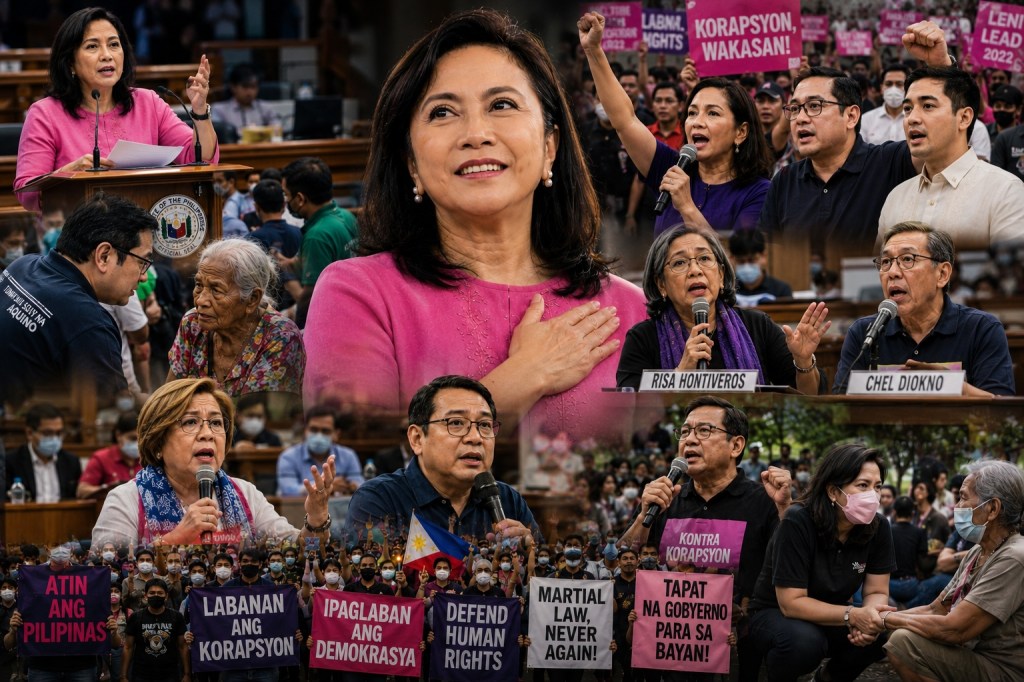
The ad hoc Opposition: Crisis of Strategy, Organisation, and Political Imagination

Much of the discussion surrounding the Philippine opposition’s electoral defeats—particularly after 2022—has revolved around the perceived reluctance of Vice President Leni Robredo to seek or sustain national leadership. Robredo’s hesitation may have mattered tactically, but it was never the central problem. The more consequential failure lies deeper: in the opposition’s chronic lack of long-term political preparation, its episodic and reactive approach to electoral politics, and its inability to articulate and institutionalise a coherent national development project capable of sustaining power beyond moments of crisis.

The challenge confronting the opposition is not simply the absence of a charismatic presidential contender, but the absence of a durable political machinery, a sustained organisational ecosystem, and a compelling political-economic vision capable of attracting long-term investment, loyalty, and social constituency-building across classes and regions.

The Marcos restoration did not emerge from historical inevitability, nor from mere nostalgia. It was the outcome of nearly four decades of disciplined political reconstruction following the family’s ouster in 1986. From the moment Ferdinand Marcos fled Malacañang, the Marcoses treated political rehabilitation as a continuous and intergenerational project. They rebuilt provincial bailiwicks in Ilocos, preserved congressional footholds through successive electoral victories, cultivated relationships with entrenched political clans, embedded themselves within shifting elite coalitions, and—perhaps most decisively—invested heavily in a digital and cultural ecosystem that gradually reframed historical memory for a new generation.

The eventual Marcos-Duterte alliance was the culmination of years of patient political consolidation, regional alliance-building, and strategic positioning. The Uniteam formula effectively combined the Marcos machinery in Northern Luzon with Duterte influence in Mindanao, while making significant inroads into the Visayas. It transformed fragmented dynastic influence into a national electoral juggernaut.

The opposition, by contrast, has largely operated through an ad hoc politics of resistance rather than a sustained politics of power-building. Coalitions are repeatedly assembled at the last possible moment, often driven more by immediate electoral necessity than by coherent ideological or programmatic alignment. Signals sent to potential allies are frequently inconsistent: unity is invoked rhetorically while rival candidacies are entertained informally; democratic reform is promised, yet local machinery-building remains weak; broad coalitions are sought, but long-term political integration rarely materialises.

Even where financial support potentially exists—from segments of the business sector, overseas Filipinos, reform-oriented networks, civil society organisations, and progressive constituencies—the opposition often arrives too late to consolidate these resources into a coherent and sustained political infrastructure. By the time national candidacies are formalised, resources, loyalties, and local alliances have frequently already migrated elsewhere.

This is not merely a tactical weakness. It reflects a deeper structural problem in the way opposition politics has evolved in the Philippines. Electoral mobilisation remains heavily candidate-centric and episodic, rather than institutional and continuous. Political engagement intensifies during election cycles, then dissipates afterward. Party-building remains weak, regional expansion inconsistent, and leadership development thin beyond a small circle of nationally recognisable personalities.

The Liberal Party, in particular, has struggled to transform itself into a genuinely national, mass-based political organisation capable of sustained grassroots consolidation outside its traditional areas of strength. It has not invested sufficiently in building second- and third-tier leadership across regions where it remains electorally vulnerable. Nor has it systematically cultivated a new generation of nationally viable political figures capable of carrying a long-term democratic reform agenda beyond the Aquino-Robredo political lineage.

The result is both a leadership vacuum and a broader crisis of political reproduction. At the heart of this weakness is the absence of a compelling and sustained national development agenda capable of functioning as the anchor for long-term political investment and coalition-building. The opposition has often defined itself primarily in relation to what it opposes—corruption, authoritarianism, disinformation, impunity—rather than through a deeply articulated and socially embedded programme for national transformation.

Yet democratic resistance alone is rarely sufficient to sustain long-term political mobilisation, particularly in contexts marked by persistent inequality, regional disparities, elite capture, vulnerability, and deep public frustration over everyday economic insecurity.

What is needed is not the replication of the Marcoses’ motivations. The Marcos political project was fundamentally rooted in dynastic restoration, historical revisionism, and the recovery of state power lost in 1986. The opposition cannot and should not derive its coherence from the same impulse. Its challenge is fundamentally different: to construct a progressive and credible national project capable of linking democracy with material transformation, institutional reform, and social justice.

Such a project must move beyond abstract liberalism and articulate a concrete and integrated political, economic, and social vision for the country.

Politically, this would require a sustained commitment to democratic deepening: institutional accountability, rule of law, protection of civil liberties, press freedom, electoral reform, and accountability for human-rights violations. But these democratic commitments must also be connected to material questions of governance and public welfare.

Economically, the opposition must articulate a development framework that addresses structural inequality rather than merely managing it. This includes progressive taxation, labour protection, industrial and agricultural revitalisation, anti-monopoly regulation, food security, strategic economic sovereignty, and a more equitable distribution of development gains across regions and sectors.

Socially, it requires a serious commitment to universal healthcare, quality public education, social housing, climate resilience, environmental justice, and social protection systems capable of addressing both chronic poverty and emerging vulnerabilities associated with economic instability and climate change. Even national sovereignty issues—such as the defence of the West Philippine Sea—must be situated not only within geopolitical discourse but within broader questions of democratic accountability, resource security, and national dignity.

Without such a programme, opposition politics risks remaining personality-driven and emotionally reactive rather than structurally transformative.

A coherent national agenda matters not only because it clarifies policy direction. It also creates the conditions for long-term political investment. Donors, reform-oriented business sectors, grassroots organisers, civil society actors, youth movements, labour groups, local political leaders, and ordinary citizens are more likely to invest sustained resources and commitment when they see not merely an electoral campaign, but a viable and enduring political project.

The Robredo Paradox

Most Philippine political families enter politics because politics is their family business. Office, influence, and dynastic continuity are part of a single project. Children are prepared for succession. Family identity becomes intertwined with political power. Withdrawal from politics is therefore not a neutral choice but a loss of influence, status, and access. The Robredos do not fit comfortably into that model.

Leni Robredo’s political journey appears inseparable from Jesse Robredo’s legacy of public service. Yet that same legacy was never about building a dynasty. It was about governance, reform, and service. The result is a curious tension. The family carries a moral and political legacy that many supporters feel should continue to find expression in public leadership, but they do not appear to possess the dynastic instinct that typically drives political families to perpetuate themselves in power. That tension may explain much about the current moment.

In many ways, the Robredos embody two competing impulses. On one hand is the imperative of continuing a public-service tradition that began with Jesse Robredo and that many Filipinos now associate with integrity, competence, and democratic governance. On the other hand is an equally understandable desire to live meaningful, productive, and fulfilling lives beyond politics. The family has already paid a steep price in service to the nation. Jesse Robredo’s death while serving in government is a constant reminder that public office carries costs that extend far beyond elections and political attacks.

Unlike political dynasties that seek to preserve power across generations, the Robredos seem uniquely positioned to walk away from politics altogether. Their daughters have established their own academic and professional identities. They are strongly positioned for public service, but none appears to have been groomed for political succession. Their family’s future does not depend on retaining public office. Yet it is precisely because they are not a dynasty that many Filipinos continue to see them as an authentic alternative to dynastic politics.

This is the paradox of the Robredos. The very qualities that make them attractive to many reform-minded Filipinos and deserving of leadership position—their apparent lack of dynastic ambition, their rootedness outside politics, and their ability to lead lives independent of public office—are also the qualities that make it difficult to assume they will remain in politics indefinitely.

For the opposition, this paradox carries an uncomfortable lesson. If the future of democratic reform depends heavily on a family that has repeatedly demonstrated its willingness to leave politics behind, then the problem is not the family. The problem is the opposition’s failure to develop institutions, leaders, and movements capable of carrying that legacy forward without relying on the continued sacrifice of the Robredos themselves.

When Robredo finally committed to the 2022 presidential race, she inspired one of the most remarkable volunteer-driven mobilisations in contemporary Philippine political history. The pink movement demonstrated extraordinary levels of grassroots energy, civic participation, youth engagement, and decentralised volunteerism across the country. That mobilisation was not the product of organisational coercion or dynastic machinery. It reflected genuine public yearning for an alternative political future.

Yet the movement also exposed the limits of charisma and moral legitimacy in the absence of equivalent long-term organisational infrastructure. Enthusiasm alone could not compensate for decades of machine-building, alliance consolidation, narrative warfare, and political financing accumulated by rival political forces.

In this sense, Robredo’s reluctance is politically significant not because it proves unsuitability for leadership, but because it reflects a broader tension within reform-oriented politics itself: the persistent underestimation of the extent to which democratic politics also requires continuous power-building, strategic endurance, and organisational consolidation.

From a purely strategic opposition standpoint, her decision not to contest the presidency in 2028—despite surveys indicating a potentially competitive race and despite the absence of another opposition figure with comparable national recall, legitimacy, and mobilising capacity—inevitably deepens the leadership vacuum confronting the democratic opposition. Senator Kiko Pangilinan’s concerns about this vacuum are therefore not exaggerated. They reflect a structural reality.

But the responsibility for that vacuum cannot be placed on Robredo alone. She is also a product of a broader opposition ecosystem that has repeatedly failed to institutionalise its gains, consolidate its movements, and sustain political engagement beyond electoral moments. The opposition has not built the organisational, financial, ideological, and territorial infrastructure required for a long political struggle. Nor has it fully internalised the hard lesson that the Marcoses understood decades ago: political power is not won only during campaigns; it is accumulated continuously through organisation, narrative construction, alliance maintenance, constituency-building, and institutional endurance.

The central issue, therefore, is not whether Robredo is “fit” for the presidency. The deeper question is whether the opposition is finally prepared to treat politics as a permanent vocation rather than an episodic reaction to democratic crisis.

The Marcoses succeeded not only because they worked harder—though in many respects they did—but because they approached politics as a generational project requiring patience, discipline, strategic flexibility, and relentless investment in political infrastructure.

The opposition continues, too often, to approach politics as a recurring emergency to be managed periodically.

Until this changes, electoral cycles will continue to expose the same structural weaknesses: fragmented coalitions, inconsistent messaging, weak regional machinery, shallow leadership benches, underdeveloped political institutions, and the absence of a unifying national programme capable of binding together diverse democratic constituencies over the long term.

The challenge confronting the opposition today is therefore far larger than the candidacy of any single individual. It is the challenge of constructing a credible, progressive, and deeply rooted national development project that Filipinos can believe in, invest in, and sustain politically over decades rather than electoral seasons.

Without such a transformation, reluctance will continue to appear as the central problem when, in reality, it is merely one manifestation of a much deeper crisis: the opposition’s continuing failure to prepare systematically, organise continuously, articulate a transformative vision, and remain embedded in the long game of democratic politics.

The stakes extend far beyond electoral victory. They concern the future character of Philippine democracy itself.

Beyond Simplified Narratives

Second Instalment

Rethinking EDSA, Governance, and the Politics of Memory

One of the more persistent distortions in contemporary narratives about EDSA is the claim that a single political bloc—often caricatured as the “dilawans”—monopolised power and steered the country in a uniform direction in the decades that followed. A closer, historically grounded examination does not sustain this claim. The post-EDSA period is better understood not as a continuum of ideological control, but as a sequence of distinct administrations, each shaped by different political coalitions, governing philosophies, and historical constraints.

The presidency of Corazon Aquino was defined less by ideological consolidation than by political restoration. It brought together a broad and inherently fragile coalition—ranging from reform-oriented elites and segments of the Catholic Church to elements of the military and civil society actors united primarily by opposition to authoritarian rule. Aquino’s leadership was marked by moral authority rooted in the anti-dictatorship struggle, but this did not translate into a coherent program for structural transformation. Her administration faced persistent destabilisation, including multiple coup attempts, as well as pressures from competing constituencies with divergent expectations. The Mendiola massacre highlighted the tensions between reformist aspirations and entrenched interests, particularly in relation to land reform and social justice. In this sense, the Aquino government functioned as a transitional regime—reopening democratic space while leaving many structural questions unresolved.

The administration of Fidel V. Ramos marked a shift toward consolidation and technocratic governance. Ramos, drawing on his military background and pragmatic political approach, sought to stabilise institutions and reposition the Philippines within a rapidly globalising economic order. His administration emphasised market-oriented reforms, deregulation, and infrastructure development, alongside efforts to resolve long-standing internal conflicts through negotiated peace processes. Politically, Ramos operated through coalition-building rather than ideological alignment, assembling a broad base of support that cut across traditional party lines. His project was less about ideological transformation than about restoring confidence—in governance, in markets, and in the state’s capacity to function. However, the limits of this approach became evident during the Asian Financial Crisis, which exposed underlying vulnerabilities in the economic model.

The presidency of Joseph Estrada introduced a different political dynamic. Estrada’s rise was grounded in populist appeal, drawing support from lower-income sectors through rhetoric that positioned him as a representative of the “masa.” Unlike his predecessors, Estrada’s legitimacy was not anchored in institutional reform or technocratic competence, but in a direct connection with marginalised constituencies. However, this political style did not translate into a coherent governance framework. His administration was marked by inconsistencies, internal divisions, and allegations of corruption that ultimately led to his ouster. Estrada’s presidency revealed both the political potency of populist mobilisation and its limitations when not supported by institutional coherence or policy depth.

The administration of Gloria Macapagal Arroyo combined elements of technocratic governance with a highly contested political foundation. Arroyo’s ascent to power, following Estrada’s removal, was framed as a constitutional transition but remained politically polarising. Her administration focused on macroeconomic stabilisation, fiscal reforms—most notably the expansion of the value-added tax—and efforts to sustain economic growth in a challenging global environment. Arroyo’s governing style was characterised by a strong emphasis on executive control and political survival, often relying on strategic alliances and institutional manoeuvring. While her tenure delivered measurable economic gains, it was persistently overshadowed by questions of legitimacy, including allegations of electoral manipulation. This duality—economic performance alongside political contestation—became a defining feature of her administration.

The administration of Benigno Aquino III is often invoked as emblematic of so-called “liberal” rule, representing a return to a reform-oriented, institution-focused approach. Anchored in a platform of anti-corruption and good governance, Aquino’s administration sought to rebuild public trust in state institutions and improve fiscal management. His leadership drew on a narrative of moral renewal linked to his family’s association with the anti-dictatorship movement. Yet even here, the picture is more complex.

Economically, the period was marked by strong growth, improved credit ratings, and increased investor confidence. The administration emphasised institutional reform, anti-corruption, and fiscal discipline, achieving macroeconomic gains and international confidence. At the same time, these gains unfolded within a broader global framework shaped by neoliberal economic principles, which prioritised market efficiency and growth but proved insufficient in addressing entrenched inequality and structural imbalances. Economic expansion did not automatically translate into equitable distribution, leaving underlying social tensions unresolved. While the emphasis on institutional reform was significant, it did not fully address deeper questions of inequality and exclusion.

Taken together, these administrations reflect a pattern of divergence rather than continuity. They were shaped by different political affiliations, leadership styles, and governing priorities. To reduce them to a single ideological bloc is to overlook the complexity of the post-EDSA period and obscure the varied ways in which governance was pursued under changing conditions. Collapsing these administrations into a single, continuous “dilawan” project is therefore analytically untenable—it simplifies a far more complex political trajectory into a convenient but misleading narrative.

At the same time, the landscape of progressive politics was undergoing its own transformation. The Left, which had been a significant force in the anti-dictatorship struggle, entered the post-EDSA period already weakened by internal conflicts—marked by ideological divisions, rectification campaigns, and violent purges that eroded cohesion and trust. These dynamics extended beyond internal organisational concerns, affecting relationships with other actors in the broader social movement.

In the years that followed, this fragmentation did not simply result in pluralism. It often translated into competition and distrust. Certain sections of the hard-line Left, seeking to recover lost ground and reaffirm historical leadership, attempted to reassert ideological authority over the broader movement. Rather than consolidating alliances, these efforts frequently deepened divisions. Other progressive groups—church-based organisations, NGOs, and emerging civil society formations—responded with caution or resistance, shaped by earlier experiences of exclusion or confrontation. What might have evolved into a broad, adaptive coalition instead became a landscape marked by contested legitimacy and limited coordination.

These internal dynamics significantly constrained the capacity of progressive forces to influence the direction of the post-EDSA transition. At a moment when institutional reform, redistribution, and social justice required sustained and coordinated pressure, fragmentation diluted collective agency. The result was not the absence of reform, but its unevenness—partial advances alongside persistent structural inequalities.

At the same time, the Philippines was navigating a rapidly changing regional and global context. The post-Cold War period gave way to new configurations of power, among them the rise of China as a major economic, political, and military actor. This shift enabled more assertive behaviour in contested spaces such as the South China Sea, where expansive and widely challenged claims intersected with the Philippines’ own territorial and sovereign interests. China’s growing influence also extended into economic and political spheres, shaping dynamics not only within the Philippines but across ASEAN.

These global shifts interacted with domestic trajectories. Liberal democratic governments operated within an international system increasingly shaped by neoliberal economic norms, while also confronting new geopolitical pressures. The space for national policymaking was therefore neither fully autonomous nor entirely constrained; it was negotiated within overlapping layers of global markets, regional power competition, and domestic political realities.

It is within this broader context—of uneven governance outcomes and fragmented social movements—that the conditions for populism took shape. Beneath the macroeconomic gains and institutional continuity, legitimate questions had been accumulating: why had liberal democratic governance struggled to address fundamental and institutional injustices? Why did inequality persist despite sustained growth? Why did reforms appear incremental in the face of urgent social needs?

The rise of Rodrigo Duterte can be understood as emerging from these unresolved tensions. His political appeal lay in his ability to articulate widely felt frustrations and to present himself as an alternative to what was perceived as a slow and ineffective system. Where previous administrations emphasised process, institutional safeguards, and gradual reform, Duterte offered a model of governance centred on immediacy and decisiveness.

At the same time, populism operates not only by responding to grievances, but by reshaping and exploiting them. It simplifies complex structural issues, identifies convenient targets, and offers solutions that appear direct and immediate but often bypass institutional safeguards. In the Philippine context, this dynamic was reinforced through the reframing of political identities. Those associated with liberal democratic governance were increasingly characterised as “disente”—a term that, rather than signifying civic responsibility, was recast as an indicator of elitism and detachment. This discursive shift allowed populist narratives to transform structural critiques into cultural and political divisions.

The governance approach that followed reflected these dynamics. Duterte’s administration sustained certain economic policies in its early years, while simultaneously redefining political practice through a greater reliance on executive authority. The brutal, bloody anti-drug campaign became a central expression of this approach. It was marked by widespread violations of fundamental human rights and raised grave concerns regarding due process and accountability. It can be understood ironically as a response—however deeply problematic—to longstanding frustrations with crime, corruption, inequality, and institutional inefficiency. Yet in promising immediate and forceful action, it also demonstrated the risks inherent in bypassing the very institutions designed to uphold justice.

Table 1: Comparative Socio-Economic Indicators Across Post-EDSA Philippine Administrations 

AdministrationPeriod CoveredAvg GDP Growth (%)Poverty Incidence (%)Inflation (avg %)Unemployment (%)Key Observations
Corazon Aquino1986–19923.145.3 (1985) → 39.9 (1991)11.28.7Post-crisis recovery; macro instability early; high inflation and debt burden
Fidel V. Ramos1992–19984.739.9 (1991) → 31.8 (1997)7.68.4Structural reforms; liberalisation; improved growth; Asian Financial Crisis impact
Joseph Estrada1998–20013.431.8 (1997) → 33.7 (2000)6.89.8Populist orientation; uneven recovery post-crisis; governance instability
Gloria Macapagal Arroyo2001–20104.833.7 (2000) → 26.3 (2009)5.87.5Fiscal consolidation (VAT); steady growth; inequality persists
Benigno Aquino III2010–20166.226.3 (2009) → 21.6 (2015)3.16.8Strong macro growth; governance reforms; limited redistribution
Rodrigo Duterte (Pre-COVID)2016–20196.421.6 (2015) → 18.1 (2018)3.25.4Growth continuity; infrastructure expansion; poverty reduction gains
(COVID/Post-COVID)2020–2022−9.5 (2020); 5.7 (2021); 7.6 (2022)18.1 (2018) → 23.7 (2021)3.98.7 (2020 peak)Severe contraction due to COVID-19; recovery uneven; poverty reversal

Notes

  1. GDP Growth
    Source: World Bank World Development Indicators (constant prices, annual %)
    Averages computed as simple mean of annual growth rates within each administration period
  2. Poverty Incidence
    Source: Philippine Statistics Authority official poverty statistics
    Figures represent closest available survey years (not annual averages)
    Not strictly comparable across decades due to methodology updates
  3. Inflation (CPI)
    Source: PSA Consumer Price Index (annual averages)
    Based on prevailing base years per period
  4. Unemployment
    Source: PSA Labor Force Survey
    Annual averages per administration period
  5. Duterte Period Treatment
    Split into:
    Pre-COVID (2016–2019) → trend continuity
    COVID/Post-COVID (2020–2022) → structural shock

Populism, in this sense, can be seen as both a product and an amplifier of unresolved tensions within the post-EDSA period. It draws on real grievances but channels them into forms of political action that may further complicate, if not totally hinder, the pursuit of justice and structural transformation. Its emergence underscores the need to examine not only the failures of governance, but also the conditions that make such political responses possible.

This process was further enabled—and accelerated—by the strategic use of digital platforms. Social media did not merely serve as a neutral channel for communication; it became an active arena where narratives were constructed, amplified, and contested. In this space, simplified and often distorted accounts of both the EDSA People Power Revolution and the Marcos dictatorship circulated alongside more complex historical interpretations. Over time, these narratives contributed to a reframing of public memory—blurring distinctions among documented history, revisionist accounts, and outright lies.

By repeatedly associating the post-EDSA period with failure and inefficiency, while simultaneously recasting the dictatorship (as well as populist, authoritarian rule) in more favourable or ambiguous terms, these narratives created an environment in which those political trajectories are readily legitimised. The persistence and scale of such messaging did not simply reflect public sentiment; it actively shaped it, reinforcing existing frustrations while manipulating them toward distorted political conclusions and actions.

In this context, the return of the Marcos family to national political prominence cannot be understood solely as a product of electoral dynamics. It reflects a longer process in which historical narratives, political dissatisfaction, and digital amplification intersected. The ability to reframe the past became part of the struggle over the present, illustrating how political outcomes are increasingly mediated not only by institutions and material conditions, but also by control over narrative and memory.

It is clear the post-EDSA period reveals neither a singular failure nor a unified project of governance. It is better understood as a contested and uneven trajectory—marked by institutional rebuilding, unresolved structural inequalities, political fragmentation, and shifting global conditions. Simplified narratives, whether celebratory or dismissive, fail to capture this complexity, as illustrated partly in Table 1 above. Difficult and persistent problems required complex and sustained responses. The challenge is not to replace one caricature with another, but to recognise how multiple trajectories—state, movement, and global context—interacted to shape the failures, limits, and possibilities of a post-EDSA Philippines.

Third and last instalment: Rediscovering our Revolution: Exploring ways forward.

The Unfinished Republic

My reflections on EDSA

First Instalment

On the occasion of the fortieth anniversary of EDSA People Power, I find myself uneasy with how carelessly we talk about it. The arguments have hardened into familiar scripts. One point of view treats EDSA as sacred ground — a completed moral triumph beyond criticism. The other dismisses it as an elite maneuver that hijacked a revolution and therefore deserves nothing but scorn. Both positions, in their own ways, avoid something more uncomfortable: accountability.

There is yet another view, one that has gained traction in recent years. It argues that the promises of EDSA were betrayed by those who led it — perhaps the liberal democrats — who, according to critics and political opponents, have ruled the country ever since. This misinformed view characterises the last four decades as a single, uninterrupted liberal order, and everything that went wrong can be laid at its feet.

It is an attractive argument because it is simple. It compresses forty complicated years into one ideological villain. 

But it is not historically accurate.

Corazon Aquino presided over six transitional and deeply unstable years mostly under a revolutionary government. Fidel Ramos followed with a technocratic modernization program shaped as much by global market currents as by neoliberal philosophy. Joseph Estrada’s presidency was explicitly populist and rhetorically anti-elite. Gloria Macapagal Arroyo presided over fiscal consolidation and political survival for more than nine years. Benigno Aquino III governed for six reformist years focused on anti-corruption and institutional discipline. Rodrigo Duterte then steered the country toward an openly illiberal and authoritarian territory. And now Ferdinand Marcos Jr. leads under yet another political alignment, as if completing a political circle – one step up, two steps back.

To say that “liberals ruled for forty years” erases the shifts, contradictions, and power realignments that defined the post-EDSA republic, and flattens all this and the current authoritarian drift into one convenient label. It also obscures the more persistent truth: political dynasties, oligarchic families, and patronage networks have adapted fluidly across administrations, regardless of political allegiances.

This does not absolve liberal democrats of responsibility. Some reforms stalled. Some opportunities were missed. Structural inequality was not acknowledged and dismantled. But responsibility must be distributed honestly. Myth-making may mobilise resentment, but it does not clarify history.

I was part of the generation shaped by that period. Many of us believed – sincerely – that we were standing at the threshold of a different republic. Not perfect, not revolutionary in the romantic sense, but open. A republic where institutions could be rebuilt, where the social justice provisions of the new Constitution could slowly reshape the political economy, where democratic space could be used for deeper transformation.

EDSA was not a finish line. It was not a betrayal either. It was both a milestone and a beginning. Perhaps it was a squandered opportunity or an unfinished business.

What followed was not preordained by those four days in February. It was shaped by choices – alliances made and broken, movements that fragmented, elites who adapted instead of retreating, reformists who sometimes mistook macroeconomic stability for structural change, and citizens who, over time, grew tired of waiting for justice that seemed permanently deferred.

We also need to be honest about the context. The Marcos dictatorship did not fall because people gathered at a highway alone. By the mid-1980s, the country was in severe economic crisis. Output had collapsed in 1984 and 1985. Debt had ballooned. Legitimacy had eroded. The regime was weakened economically, morally, and institutionally. The uprising was the culmination of multiple, layered pressure – years of organizing, resistance, repression, fracture, and contested legitimacy. It was not a miracle detached from material reality.

What EDSA decisively restored was civic space. Elections meant something again. Newspapers reopened. Political prisoners were freed. A new Constitution was drafted with safeguards against the concentration of power. These were not small achievements.

But restoration is not transformation.

Liberal democracy is indispensable for preventing dictatorship. I will never argue otherwise. Yet liberal democracy, by itself, does not dismantle oligarchy. It does not automatically redistribute land. It does not prevent political dynasties from reconstituting themselves within electoral politics. It does not dissolve wealth concentration. In societies like ours — where inequality is historically embedded – procedural democracy can coexist with structural injustice.

When that coexistence persists for decades, legitimacy becomes fragile, not because people want another dictator, but because they grow tired of reforms that are either stalled or never seem to reach the roots of inequality. Fatigue becomes fertile ground for strongman narratives and resentment becomes political currency.

The restoration of liberal democracy in 1986 was necessary. It was immeasurably better than authoritarian rule. But it proved insufficient – under Philippine structural conditions – to produce a durable settlement of social justice. 

We overthrow, we restore, we stabilize. Then we drift. EDSA became a symbol, sometimes more than a program. Those who benefited from democratic reopening often retreated from the harder work of institutional transformation. Meanwhile, democratic forces fractured – liberals defending procedure but constrained by elite capture; progressives demanding transformation but divided by doctrine, suspicion, and tactical missteps. Over time, these differences became perennial debates, then turned into identities. We learned to distrust each other more than we learned to build together.

And so the Marcos-Duterte axis did not rise from deception alone. It fed on real disillusionment. It fed on inequality that remained acute despite stability and growth. It fed on opposition movements that could not sustain unified moral direction. It fed on our own inability to convert democratic space into structural change.

There is also a geopolitical layer that complicates everything. The global shift toward neoliberal policy in the 1980s, the end of the Cold War, the rise of export-led East Asian growth, and the emergence of China as a strategic power all reshaped the terrain on which our democracy operated. China’s growing assertiveness in the South China Sea – and its rejection of the 2016 arbitral ruling – remind us that sovereignty and democracy today are contested not only internally but externally. Fragmented domestic politics makes meddling and manipulation by external forces easier.

So when we mark forty years since EDSA, the task is not commemoration for its own sake. It is reflection. It is asking whether we treated 1986 as an end point rather than the beginning of a generational reconstruction.

If EDSA is to remain historically meaningful, it must be reclaimed as unfinished – an incomplete republic-building project that still demands deeper institutional shifts toward something more socially democratic, more just, and more transformative.

Next:

What follows is not a morality play. It is a historical reckoning. We will revisit the fractures of the 1980s, examine administrations past the caricatures, confront the mathematics of reality, and ask whether liberal democracy — as practiced in an oligarchic society — is enough.

It may not be.

And if it is not, then the responsibility is no longer about defending or denouncing EDSA. It is about completing it.

Beyond Borders, Beyond “Normal”

Solidarity, Democracy, and the Transformative Future We Must Build

My previous posts explored the lessons of COVID-19, the urgent need for flood-proof cities, the links between health and climate, the failures of car-centric mobility, and the fragility of education. Each theme pointed to the same conclusion: the systems we inherited were unjust, unsustainable, fragile, and corruptible. Business-as-usual is not only broken; it is dangerous.

But to reimagine life, society, and governance, we must go beyond national reforms. Climate change, pandemics, disinformation, and corruption spill across borders. The future of transformative change depends on solidarity — global, regional, and local — and on leadership that strengthens democracy, not dismantles it.

Hybrid Futures

The pandemic revealed both possibility and fragility. Hybrid work showed that productivity need not mean traffic and smog; hybrid study proved that learning can adapt to crisis. But millions without savings, digital access, or social protection were left behind. In the Philippines, people had no choice but to break lockdowns to survive, leading to devastating infection waves. The lesson is not that lockdowns failed, but that governance failed to protect the poor.

Hybrid futures must be made a right — supported by investments in community hubs, digital access, and social safety nets. To treat them as privileges is to deepen inequality. To secure them as rights is to build a transformative society where adaptation is equitable and inclusive.

Transformative Systems

Year after year, floods devastate lives and livelihoods. The Philippines loses ₱133 billion annually to flood damages (World Bank, 2022), while extreme heat increasingly shuts down schools and workplaces. Yet from 2022 to 2024, ₱545 billion was poured into flood control projects riddled with corruption. Infrastructure built as political pork cannot protect people.

Transformative adaptation demands accountable governance: transparent budgets, participatory planning, and leadership willing to legislate for long-term safety rather than short-term patronage.

People-Centered Mobility

Metro Manila bleeds ₱3.5 billion daily in congestion costs. A statistical modelling by the Centre for Research on Energy and Clean Air (CREA) in 2023 using air pollution, rates of exposure, and health coefficients, estimated that air pollution killed 66,000 Filipinos in 2019 (WHO). Cars, less than 30 percent of trips, still dominate over 70 percent of road space (MMDA). This is not accidental. It is the product of choices — choices to prioritize projects ripe for kickbacks while delaying public transport modernization.

Mobility reform is not only about buses, trains, and bike lanes. It is about justice: pregnant women, elderly citizens, children, and persons with disabilities deserve safe, dignified mobility. Hybrid work and study can ease pressure, but governance must shift resources from car-centric “development” to a transformative vision of mobility that puts people and dignity first.

Community Hubs

Education disruptions are mounting: 32 lost teaching days in 2023–2024 due to floods and heat, 19 million students affected by Storm Trami, and more than 4,000 damaged schools in three years. When disaster strikes, learning collapses.

Community hubs — with internet, childcare, and safe study spaces — can keep education alive. But this requires governance that prioritizes equity, not just elite schools. It also requires digital infrastructure that is secure from sabotage and espionage, ensuring transformative adaptation in education, where learning continues despite shocks and inequalities are reduced rather than widened.

Accountable Leadership

Across every sector, corruption bleeds resources away from transformation. Citizens are taxed, then asked to shoulder modernization costs, while contractors and officials profit. This is not leadership; it is betrayal.

True leadership does not mean authoritarian shortcuts. We should have learned this from both past dictatorships and current populist regimes that suppress dissent while enabling graft. Authoritarianism promises efficiency but delivers corruption, fear, and weakened institutions. What we need are leaders who defend democracy and the rule of law — locally and globally — while reforming systems to serve the public good.

Good governance is not abstract. It is the decisive factor that makes hybrid work equitable, flood defenses real, transport safe, and education transformative and future-ready.

Global and Regional Solidarity

The Philippines cannot face these challenges alone. Corruption, climate shocks, and pandemics spill across borders. Around the world, citizens have risen in protests against corruption and inequality, signaling a shared demand for accountability. Yet at the same time, we see backsliding: climate denial, ultranationalism, immigration scapegoating, unjust trading practices, and a slide toward despotic rule.

What is needed is solidarity. A peace premium: shifting resources away from militarism and corruption toward schools, health, transformative adaptation, and digital equity. Global institutions like the Pact for the Future and the Global Digital Compact hint at this direction but must be made more accountable to citizens rather than power blocs.

ASEAN, too, must step up. It can no longer afford to be a cautious talk shop. As a bloc, it can amplify the voices of its less developed members — Cambodia, Laos, Myanmar, and the Philippines — in demanding fairer climate finance, human-centered digital governance, and international rules that protect people, not only markets. A stronger ASEAN voice on global platforms is essential for justice in the region.

The Courage to Imagine

The greatest danger is not only corruption or climate collapse but nostalgia — the longing to “return to normal,” as if that normal were ever just. The air we breathed before the pandemic was thick with smog from jeepneys and cars; the streets of Metro Manila were clogged daily with traffic that drained ₱3.5 billion in wasted time and fuel. The schools were already overstretched, with leaking roofs and overcrowded classrooms. Hospitals were underfunded, forcing poor families to pay out of pocket or go untreated. Governance was corrupted by budget insertions and ghost projects. That past was not safe, equal, or sustainable. To cling to it is to chain ourselves to crises that will only intensify.

What we need instead is courage to imagine a transformative future, rooted in our own realities. Imagine barangay hubs where parents type reports while children learn nearby, both sheltered from floods or extreme heat. Imagine jeepneys reborn as clean electric shuttles, safe for children and elderly passengers, no longer symbols of survival but of dignity. Imagine mangrove parks along Manila Bay that serve as flood barriers by day and recreation spaces by evening, proof that nature and city life can co-exist. Imagine hospitals equipped with solar power, mobile clinics reaching far-flung barangays, and health workers supported, not abandoned, by government.

Picture classrooms that no storm can silence, because every child has access to safe, connected learning spaces. Picture governance where every peso is traceable, every contract open to citizen oversight, and leaders earn respect not through fear but through trust. Picture businesses competing to design the most transformative homes, the safest transport, and the most affordable internet, proving that profit and public good can reinforce one another.

And picture borders not as walls of fear, but as bridges of cooperation — an ASEAN that secures climate finance, fair trade, and digital justice for its peoples, and a global community that prizes peace as the best investment in human survival.

These are not dreams too lofty for the Philippines. They are already glimpsed in Marikina’s flood monitoring, Iloilo’s river rehabilitation, Cebu’s rainwater harvesting, BGC’s cisterns, and Naga’s participatory planning. What is missing is not capacity or resources, but imagination — and the governance to make imagination real.

Toward a Just and Transformative Future

The crises we face — floods, pandemics, authoritarian backsliding — are products of human choices. And because they are human-made, they can be unmade. The question is whether we will have the courage to choose differently.

Citizens must demand accountability. Businesses must innovate for transformation rather than collude for profit. Leaders must strengthen, not weaken, democracy and the rule of law. ASEAN must amplify vulnerable voices. Global institutions must reorient toward human security.

The choice is stark: continue shackled to nostalgia for a broken past, or free ourselves to build a just and transformative future that redefines how we live, work, learn, and govern.

The imagination premium is within reach — if we demand it, defend it, and act on it together.

From Car-Centric Chaos to People-Centered Solutions

For millions of Filipinos, commuting is not a daily routine but a daily ordeal. Metro Manila’s congestion alone drains an estimated ₱3.5 billion every day in lost productivity, wasted fuel, and delays — a figure projected to rise to ₱5.4 billion per day by 2035 if no systemic changes are made (Japan International Cooperation Agency, 2018). These numbers, staggering as they are, tell only part of the story. What they fail to capture are the countless human costs: the exhaustion of workers who spend three to four hours a day in traffic, the health risks borne by commuters trapped in floods or under punishing heat, and the stress of children running after jeepneys or buses in unsafe streets. The economic cost is vast, but the social and human toll is deeper still.

Air quality magnifies the problem. Transport-related emissions make Metro Manila’s air among the dirtiest in the region, with ambient air pollution causing around 66,000 premature deaths each year nationwide and economic damages estimated at ₱2.2 trillion annually (World Bank; WHO, 2023). Public utility vehicles, though a fraction of the fleet, account for the bulk of black soot emissions along roads, contributing disproportionately to heart and lung diseases. The invisible poison of polluted air silently erodes the nation’s health and productivity, while noise, stress, and sleep loss compound the daily wear and tear on human bodies.

Citizenship

Commuters have too often been asked to endure the unbearable as though it were destiny: standing for hours in overcrowded buses, wading through flooded intersections, or breathing exhaust fumes at roadside terminals. These struggles have been normalized as the “Filipino way of life.” But citizenship cannot mean resignation. It must mean demand — demand for mobility that is safe, dignified, and accessible to all.

For children, this means safe passage to school without risking life and limb on chaotic roads. For women, especially those who are pregnant, it means being able to reach clinics without exposure to heat stress, floods, or air pollution that endangers maternal health. For the elderly and persons with disabilities, it means having sidewalks, crossings, and public transport systems that do not exclude them from economic and social participation. These groups are not marginal; they are central to society. Every time a child misses class due to unsafe transport, every time an elderly person is confined to their home, or every time a person with disability is denied mobility, society pays a cost. These costs may not appear in budget spreadsheets, but they are real: in wasted human potential, lost productivity, and higher health expenditures.

Citizenship in this context means not just coping but raising voices, organizing for safer streets, defending civic spaces for advocacy, and demanding accountability in how transport budgets are spent. Mobility, like health or education, is a right — and it must be claimed as such.

Governance

The roots of the crisis lie in governance choices that have long favored cars over people. In Metro Manila, cars account for less than 30 percent of daily trips yet consume more than 70 percent of road space (MMDA, 2019). Public funds are channeled into road widening and flyovers that benefit a minority of private car users, while public transport systems, pedestrian spaces, and bicycle lanes remain fragmented, unsafe, and underfunded. Year after year, pork-barrel politics and budget insertions inflate road-building allocations, while the modernization of jeepneys, the improvement of bus systems, and the creation of safe, green pedestrian and cycling networks are delayed or neglected.

These priorities are distorted not by necessity but by politics. Projects vital for the majority — such as safe, affordable public transport, dignified pedestrian access, or green open spaces — are either denied adequate budgets or sidelined in favor of more “profitable” undertakings, profitable not for citizens but for those who see them as easier channels for corruption. The consequences are passed on to commuters and drivers, who are forced to shoulder modernization costs on top of the taxes they already pay. Jeepney and PUV modernization, for example, is framed as a step toward cleaner and safer transport, but structured in ways that make drivers bear the brunt of expenses. Requirements to obtain new franchises or to join cooperatives in order to “access loans” or government support transform modernization into a political weapon. Instead of being instruments of inclusive progress, these projects become levers of patronage, partisan control, and financial burden — while the larger public continues to suffer through unsafe, unreliable, and polluting systems.

Reversing this pattern requires deliberate governance choices. Legislation and regulation must prioritize investments in reliable public transport, safe cycling networks, and walkable urban design. Emission standards must be enforced to protect public health. Flood management must be integrated into transport planning, recognizing that every monsoon paralyzes mobility. Above all, transparency in procurement and spending is essential so that billions intended for transport modernization are not siphoned away. Governance that is people-first recognizes mobility not as a privilege but as a public right.

Private Sector

The private sector is both part of the problem and part of the solution. The car industry, construction firms, and mall-based developments have shaped cities to favor automobiles and car-owning elites, locking in a cycle of congestion and pollution. Contractors, too, have profited from bloated road projects, often in collusion with politicians, while everyday commuters shoulder the cost in wasted time and declining health.

Yet the private sector also has the capacity to innovate. Employers can ease the burden on workers by supporting hybrid work and flexible hours, reducing the necessity of commuting every day through floods and heat waves. Property developers can design mixed-use spaces that minimize travel distances and integrate flood-resilient, walkable environments. Logistics and transport companies can invest in electric vehicles and cleaner fleets, reducing emissions and operating costs at the same time. By aligning their practices with sustainability, businesses can transform mobility into both a public good and a market opportunity.

The challenge is to move away from dependency on car sales and car-centric development toward innovation that supports people-centered, climate-resilient mobility. Just as collusion drains resources, innovation multiplies them.

From Car-Centric Chaos to Hybrid Futures

Around the world, cities have shown what is possible. Bogotá’s bus rapid transit has given commuters affordable, reliable mobility. Paris and Copenhagen have reallocated road space to bicycles and pedestrians, reducing both emissions and stress. Jakarta has experimented with car-free days, reclaiming streets for people. Even in the Philippines, the EDSA busway has shown that dedicated lanes can make commuting safer and faster when governance is firm.

But the future of mobility is not only about cleaner buses, wider sidewalks, or protected bike lanes. It is also about rethinking why, when, and how often people must travel. The pandemic proved that not every job or class requires daily presence. Hybrid work and study models — supported by community hubs with reliable internet, safe workstations, and childcare facilities — reduce demand on clogged roads and overcrowded vehicles. These arrangements are not luxuries; they are lifelines in a country where floods, extreme heat, and pollution make commuting hazardous. By cutting unnecessary trips, hybrid systems ease congestion, lower emissions, and protect health, while freeing up resources for those who must travel — nurses, drivers, factory workers, food vendors.

Linking transport reform with hybrid futures offers the clearest path out of car-centric chaos. It allows the Philippines to reclaim time, health, and dignity from the grip of traffic and smog.

Toward People-Centered Mobility

The chaos of Philippine transport is not inevitable. It is the outcome of choices that prioritized cars over people, profit over public good, and collusion over accountability. Yet just as choices created this crisis, different choices can end it. Citizens must refuse resignation and demand safer, more inclusive mobility. Governance must redirect resources from car-first infrastructure to people-first systems that serve the majority. The private sector must shift from dependency to innovation, aligning its growth with sustainable and equitable mobility.

The costs of congestion — the billions lost daily, the 66,000 premature deaths each year, the rising toll of road crashes — are already staggering. But layered onto these are the uncounted losses borne by children, pregnant women, the elderly, and persons with disabilities who are denied safe and dignified passage. These are not just deficits in equity and justice but real economic losses in health care costs, wasted productivity, and wasted human potential. Accounting for them makes the case for change even stronger.

Mobility and clean air are not luxuries. They are foundations of survival, health, and dignity. A Philippines that embraces people-centered mobility — tied to adaptable, hybrid work and study systems — can move beyond traffic and smog toward a future where everyone, regardless of age, gender, or ability, has the right to safe, healthy, and dignified movement.

Health and Climate Resilience

The COVID-19 pandemic was not only a public health emergency; it was a stress test that revealed the limits of the Philippine health system and the fragility of everyday survival for millions of families. Despite one of the longest lockdowns in the world, the country suffered more than 66,000 excess deaths in 2021 (Philippine Statistics Authority, 2022). Hospitals overflowed, health workers were pushed to their limits, and corruption in medical procurement further eroded trust in institutions that should have been the backbone of protection. Lockdowns were meant to contain the virus, but because so many Filipinos lived without savings or safety nets, people had little choice but to venture out in search of work. In the process, the virus spread more widely, and the economic and social costs mounted.

Yet the pandemic also offered lessons that matter for the future. Hygiene practices became widespread almost overnight. Community health workers proved indispensable in delivering basic services, often with little recognition. Families discovered the importance of nutrition, exercise, and shared responsibility for well-being. These shifts, however uneven, underscore that health resilience begins not in hospitals alone but in the cultural fabric of daily life. And this is where the story moves from pandemic to climate. The current normal of unseasonal storms, prolonged floods, and extreme heat waves is already compounding health risks. In 2023, the Department of Health recorded 513 cases of heat-related illness, while the first quarter of 2024 saw six heat-related deaths (DOH/CCC, 2024). Heat indices above 42 °C are now common in urban areas, placing students, commuters, and outdoor workers in danger (ABS-CBN, 2025). Floods continue to spread waterborne diseases such as leptospirosis and diarrhea, while mosquito-borne illnesses like dengue thrive in warmer, wetter conditions. Health and climate are no longer separate issues; they are part of a single, urgent struggle for resilience.

Citizenship: Shared Responsibility

The pandemic reminded Filipinos that health is not an individual pursuit but a shared responsibility. Communities quickly adapted to new hygiene habits, proving that cultural norms can shift when survival is at stake. Yet sustaining these practices requires more than fear of disease; it calls for citizens who see their own health as inseparable from that of their neighbors. Community clean-ups, sanitation campaigns, and vigilance against dengue are all forms of shared action that strengthen resilience at the most local level. Barangay health workers remain the unsung heroes of this effort — underpaid, under-equipped, but essential in linking households to the broader health system. Civil society organizations also play a critical role, defending public health budgets and demanding equitable access to care. When citizens organize, they transform coping into collective power, and resilience becomes not just survival but dignity.

Governance: Preventive Systems

The chronic underinvestment in Philippine health care has long been evident. At roughly 5 percent of GDP, health spending falls short of the 7 percent recommended by the World Health Organization for countries at the Philippines’ level of development. This leaves hospitals overcrowded, rural clinics understaffed, and laboratories under-equipped. During the pandemic, these weaknesses turned deadly, as reactive, crisis-driven measures failed to prevent thousands of avoidable deaths. Building resilience requires a different approach: one that invests in foresight rather than scrambling in response. Barangay health stations and municipal clinics must be expanded, laboratories equipped for early detection, and surveillance systems strengthened to monitor climate-sensitive pathogens — from dengue-carrying mosquitoes to waterborne bacteria and zoonotic spillovers from displaced animal habitats. The Universal Health Care Act of 2019 remains a promising framework, but it demands consistent funding and transparent implementation. Health must also be fully integrated into disaster risk reduction, so that every evacuation plan for floods or heatwaves includes sanitation, medical care, and continuity of services. Governance, in short, must move from reactive firefighting to preventive protection.

Private Sector: Profits, Common Good, and Market Growth

The private sector has often seen health as a narrow concern — workplace safety, employee wellness programs, and insurance coverage. Yet the pandemic blurred the line between workplace and community health, and climate change is erasing that line altogether. Companies cannot thrive in communities plagued by heat stress, dengue outbreaks, or constant flooding. Businesses have both a duty and an interest in treating public health as part of their mandate. Employers can provide cooling spaces and flexible work arrangements that protect workers during extreme heat. Developers can invest in urban greening — shaded walkways, green roofs, and pocket parks — that reduce urban heat islands while also enhancing livability. Agribusiness and food companies can strengthen surveillance of livestock and wildlife supply chains to reduce the risk of zoonotic diseases. And perhaps most crucially, corporations must abandon collusion in corruption that drains public resources, and instead align their investments with public health goals. When companies shift from seeing health as a cost to seeing it as a source of resilience, they contribute to the common good — and in the process, they strengthen the very markets on which they depend. From profits, to common good, to market growth: this must become the cycle of a sustainable economy.

From Pandemic Lessons to Climate Futures

There are models worth emulating. Cuba, despite its limited wealth, has built one of the world’s most resilient health systems by focusing on prevention and community care. Thailand, through its Universal Health Coverage reforms, demonstrated that even middle-income countries can achieve broad, equitable access to health. Medellín in Colombia reduced urban heat and improved public health simultaneously by creating “green corridors” — an integrated approach that Philippine cities could readily adapt. And closer to home, Marikina has shown how disaster response can be health-centered, Iloilo has rehabilitated its riverbanks to reduce disease risks and improve urban space, and barangay health workers across the country have demonstrated resilience against all odds.

The pandemic revealed the costs of a health system that is underfunded, reactive, and corrupt. Climate change is now amplifying those risks, ensuring that floods, storms, and heatwaves will increasingly shape the health of the nation. Building resilience is not optional; it is survival. It begins with citizens who treat health as a shared responsibility, continues with governance that invests in prevention rather than reaction, and extends to a private sector that recognizes public health as both duty and opportunity. The lesson of the pandemic is clear: resilience is not simply bouncing back. It is transforming the very systems that failed — so that they do not fail again in the face of the next crisis.

Building Resilience Beyond Sandbags and Scandals

Every rainy season, Filipinos brace themselves for the same ordeal: flooded streets, stranded commuters, classrooms turned into evacuation centers, and homes filled knee-deep with murky water. According to the World Bank, more than 14 million Filipinos are exposed to flooding each year, with damages averaging ₱133 billion (≈US$2.4 billion) annually in lost assets, livelihoods, and productivity (World Bank, 2022).

Climate change is already magnifying this threat. PAGASA projects that extreme daily rainfall events will become more frequent, particularly in Luzon and the Visayas. At the same time, sea levels around the Philippines are rising at nearly double the global average — between 5.7 and 7.0 millimeters per year — making coastal flooding more frequent and destructive (World Meteorological Organization, 2023; PAGASA). Combined with rapid urbanization, clogged drainage systems, and the spread of informal settlements into floodplains, the current normal of yearly floods will only worsen unless the country embraces systemic change.

Citizenship and Culture: Demanding Change

For decades, citizens have been expected to “cope” with floods by stacking sandbags, raising furniture, or wading through waist-deep water. These coping mechanisms, repeated year after year, normalize disaster and shift responsibility to households that are often the least equipped to manage it. Resilience, however, must go beyond individual sacrifice.

True citizenship in the face of flooding means demanding transparency in how flood control budgets are spent. Billions of pesos are inserted into the General Appropriations Act every year for flood control projects, yet many are poorly built or never completed at all, as the Commission on Audit has repeatedly flagged. Civic groups, barangay councils, and homeowners’ associations can serve as watchdogs, pushing back against the entrenched culture of “budget insertions” that fuels corruption. At the same time, culture itself matters: reducing household waste that clogs drainage, participating in greening efforts, and embracing resilience as a shared responsibility all help ensure that solutions are not purely technical, but also social and cultural.

Floods are not inevitable acts of fate. They are failures of planning, governance, and accountability. Citizens have both the power and responsibility to demand more.

Governance: Protection

The governance failures in flood management are glaring. Between 2022 and 2024 alone, the government allocated ₱545 billion for flood control projects, yet many of these projects were later flagged as substandard, overpriced, or even non-existent (Reuters, 2025). Each year, the National Expenditure Program is transformed into the General Appropriations Act through budgetary “insertions” that inflate flood control allocations well beyond technical needs. Instead of protecting citizens, these projects too often become conduits for political patronage and private gain.

Shifting from pork to protection requires a new governance framework. Legislation must establish climate-resilient infrastructure standards, mandating underground floodwater reservoirs, expanded drainage networks, permeable pavements, and the integration of green infrastructure in all new developments. Urban planning must adopt a landscape approach that respects natural waterways, wetlands, and river basins, rather than building over them. Independent oversight bodies such as the Commission on Audit and the Ombudsman must be empowered to prosecute ghost projects and penalize both officials and contractors engaged in corruption. Finally, relocation and housing strategies must prioritize the poor, ensuring that informal settlers are not simply evicted from flood-prone areas but offered dignified, safe alternatives.

Without accountability and foresight, even the most sophisticated engineering projects will fail. Flood control must no longer be treated as a political prize but as a public necessity.

Private Sector: Innovation

The private sector occupies a complicated space in the story of floods. On the one hand, construction firms and contractors have too often been complicit in overpricing, license-renting, and ghost projects, benefiting from the very corruption that undermines public resilience. On the other, businesses also possess the expertise, technology, and resources that could drive innovative solutions.

For the private sector to shift from collusion to innovation, it must refuse participation in corrupt bidding schemes and commit to integrity in procurement. Developers can incorporate flood-resilient designs, including underground cisterns, elevated foundations, and permeable surfaces that reduce runoff. Partnerships with government could expand drainage systems, establish rainwater harvesting schemes, and invest in wastewater reuse, turning floodwater from a hazard into a resource. More fundamentally, businesses must see resilience not as a burden but as a market opportunity. Companies that lead in climate-resilient infrastructure will not only protect communities but also open new domestic and international markets. The cycle must change: from profits alone, to public good, and back again to market growth.

Learning from Models Abroad

The Philippines does not need to invent solutions from scratch. Other countries have faced similar threats and built models worth adapting. In Tokyo, the Metropolitan Area Outer Underground Discharge Channel is a vast system of tunnels and tanks that capture excess floodwater during storms. While prohibitively expensive at full scale, smaller underground cisterns beneath parks or intersections could be piloted in Manila or Cebu. In Singapore, the Marina Barrage functions as both a tidal barrier and a freshwater reservoir, while also serving as public space — a model of how infrastructure can combine resilience with livability. The Netherlands’ “Room for the River” program restores floodplains and wetlands, proving that giving rivers more space can sometimes be more effective than raising dikes. Bangkok’s “Monkey Cheek” reservoirs, where urban parks double as floodwater retention basins, offer a low-cost solution particularly relevant for dense Asian cities.

Philippine Pilots: Proof It’s Possible

Encouragingly, there are also homegrown examples that show resilience is possible when governance and citizen action align. Marikina City has developed a community-based flood warning system that provides real-time alerts, saving lives during typhoons. Iloilo has rehabilitated its river through mangrove replanting, clean-ups, and strict zoning enforcement, transforming a once-polluted waterway into a model of flood mitigation and urban renewal. Cebu has piloted rainwater harvesting systems in schools and barangays, demonstrating how small-scale innovations can reduce both flooding and water scarcity. Naga City has integrated participatory governance into its disaster planning, ensuring that citizens themselves are partners in shaping resilience strategies.

These local cases prove that innovation and accountability can make a tangible difference. The challenge lies in scaling them up and protecting them from the corruption that undermines so many other efforts.

Toward Flood-Proof Cities

Floods will never disappear entirely in a tropical archipelago like the Philippines. But the devastation we experience today is not inevitable. It is the result of political choices — to treat flood control as pork, to build on natural waterways, to neglect drainage, and to collude rather than innovate.

The path forward is equally a matter of choice. Citizens must refuse to normalize disaster and instead demand transparency. Governance must redirect flood control spending from patronage to protection. The private sector must move beyond collusion and embrace innovation as both duty and opportunity. And the Philippines must draw lessons not only from Tokyo, Singapore, the Netherlands, and Bangkok, but also from its own successes in Marikina, Iloilo, Cebu, and Naga.

Adapted, scaled, and protected from corruption, these models can move the country beyond sandbags and scandals — toward cities that protect lives, livelihoods, and dignity in the face of a changing climate.

Imagining a Post-COVID World – looking and moving forward

The COVID-19 pandemic brought the world to a standstill. Streets fell silent, workplaces closed their doors, schools went online, and families were confined to their homes. For many in the Philippines, these disruptions were particularly harsh. Lockdowns were extended for months, yet instead of controlling infections, they revealed the cracks in governance, the fragility of our systems, and the limits of resilience for millions of ordinary citizens. People needed to work to survive, but most had neither savings nor recourse to safety nets. Daily wage earners were forced to go out in search of income, fueling the continued spread of the virus. Despite enduring one of the world’s longest lockdowns, the country suffered large-scale losses in human life, while corruption in government procurement — from overpriced medical supplies to questionable contracts — undermined public trust when it was needed most.

Yet the pandemic was not only a story of loss. It also forced societies to reimagine how life, work, and community could function differently. The sudden shift to remote work showed that many jobs can be done from home without sacrificing productivity. People discovered they could save fuel, reduce commuting time, and spend more hours with family. For cities notorious for traffic congestion and pollution, hybrid work arrangements offered a glimpse of a future with fewer cars on the road and cleaner air. What was once a privilege of the few should now be recognized as a necessity, an innovation, and even a right — not only to protect health in times of crisis but to reduce the stress, costs, and hazards of unsustainable daily commuting.

Remote learning carried similar lessons. Though uneven and difficult for many, it demonstrated that parents could be more involved in their children’s education and that schools could reimagine how to balance classroom instruction with digital tools. In communities where flooding, heat, or transport makes attending school a daily ordeal, flexible learning arrangements could relieve both financial and health burdens. At the same time, the pandemic underscored that learning from home can only succeed if it is supported by reliable and accessible internet connectivity, safe community hubs, and policies that bridge the gap between rich and poor.

The crisis also reshaped attitudes toward health and hygiene. Handwashing, sanitation, and fitness became more widely recognized as essential to resilience. People began to think more carefully about diet, exercise, mental well-being, and the fragility of their own health. But the pandemic also revealed a cruel divide: those with space at home could exercise, work remotely, shelter safely, and even tend to their home gardens, while millions in cramped housing or informal settlements could not. Resilience, in this sense, was as much about poverty and inequality as it was about public health.

These lessons extend beyond individual households to the broader systems that sustain life. Food production and essential services must continue during crises, but workers in these sectors were often the least resilient and protected. Forests and ecosystems, when preserved, act as natural buffers against zoonotic diseases; when destroyed, they release new risks into human communities. The pandemic reminded us that human health cannot be separated from the health of ecosystems. Preserving habitats and limiting the displacement of animals and viruses are not environmental luxuries — they are public health necessities.

Underlying all of this is the recognition that change cannot be left to individuals alone. A cultural shift in lifestyles and consumption is vital, but without legislation and accountable governance to support it, the system defaults back to old patterns. The pandemic era was rife with corruption, not only in health supplies but also in infrastructure spending, including flood control projects where billions were allocated but many outputs were substandard, overpriced, or simply non-existent. These scandals illustrate the depth of collusion among private contractors, politicians, andgovernment agencies, with citizens too often passive in demanding accountability. If nothing changes, the same patterns of waste and patronage will cripple the country’s ability to cope with future crises.

The private sector also bears responsibility. During the pandemic, some companies protected workers through flexible arrangements, safe facilities, and digital support. Others lobbied for quick reopening regardless of risks or used the crisis as an excuse for retrenchments. As the country reimagines its future, businesses must shift from a narrow focus on profit toward a recognition that their long-term growth depends on secure working conditions and the common good. This means investing in hybrid work infrastructure, ensuring safe working conditions during extreme heat and floods, and refusing collusion in corruption that drains public funds away from essential services. From profit to common good, and back again to market growth — this is the logic that must replace the destructive cycle of greed and short-term, unfair advantages.

The pandemic was a global tragedy, but it was also a rehearsal for the crises that climate change is now making permanent. Extreme heat, unseasonal floods, and stronger storms are the “current normal.” To cope, the Philippines must build systems that prioritise resilience, equity, and accountability. Citizens must adopt new cultural habits that value health, sustainability, and solidarity (e.g., damayan or bayanihan) – a sense of safe community. Governance must be strengthened through legislation that protects the public good and through institutions that resist corruption. The private sector must innovate not just for profit but for the survival and dignity of people.

Imagining a post-COVID world is not about going back to how things were. It is about taking the painful lessons of the pandemic and using them to reorganize how we live, work, learn, and play — with implications that reach across social, economic, political, and ecological systems. Only then can we hope to cope better with the crises ahead and begin the long work of rehabilitating the systems — including the climate — on which future generations depend.

Next: Flood-Proof Cities – Building Resilience Beyond Sandbags and Scandals