The COVID-19 pandemic was not only a public health emergency; it was a stress test that revealed the limits of the Philippine health system and the fragility of everyday survival for millions of families. Despite one of the longest lockdowns in the world, the country suffered more than 66,000 excess deaths in 2021 (Philippine Statistics Authority, 2022). Hospitals overflowed, health workers were pushed to their limits, and corruption in medical procurement further eroded trust in institutions that should have been the backbone of protection. Lockdowns were meant to contain the virus, but because so many Filipinos lived without savings or safety nets, people had little choice but to venture out in search of work. In the process, the virus spread more widely, and the economic and social costs mounted.
Yet the pandemic also offered lessons that matter for the future. Hygiene practices became widespread almost overnight. Community health workers proved indispensable in delivering basic services, often with little recognition. Families discovered the importance of nutrition, exercise, and shared responsibility for well-being. These shifts, however uneven, underscore that health resilience begins not in hospitals alone but in the cultural fabric of daily life. And this is where the story moves from pandemic to climate. The current normal of unseasonal storms, prolonged floods, and extreme heat waves is already compounding health risks. In 2023, the Department of Health recorded 513 cases of heat-related illness, while the first quarter of 2024 saw six heat-related deaths (DOH/CCC, 2024). Heat indices above 42 °C are now common in urban areas, placing students, commuters, and outdoor workers in danger (ABS-CBN, 2025). Floods continue to spread waterborne diseases such as leptospirosis and diarrhea, while mosquito-borne illnesses like dengue thrive in warmer, wetter conditions. Health and climate are no longer separate issues; they are part of a single, urgent struggle for resilience.
Citizenship: Shared Responsibility
The pandemic reminded Filipinos that health is not an individual pursuit but a shared responsibility. Communities quickly adapted to new hygiene habits, proving that cultural norms can shift when survival is at stake. Yet sustaining these practices requires more than fear of disease; it calls for citizens who see their own health as inseparable from that of their neighbors. Community clean-ups, sanitation campaigns, and vigilance against dengue are all forms of shared action that strengthen resilience at the most local level. Barangay health workers remain the unsung heroes of this effort — underpaid, under-equipped, but essential in linking households to the broader health system. Civil society organizations also play a critical role, defending public health budgets and demanding equitable access to care. When citizens organize, they transform coping into collective power, and resilience becomes not just survival but dignity.
Governance: Preventive Systems
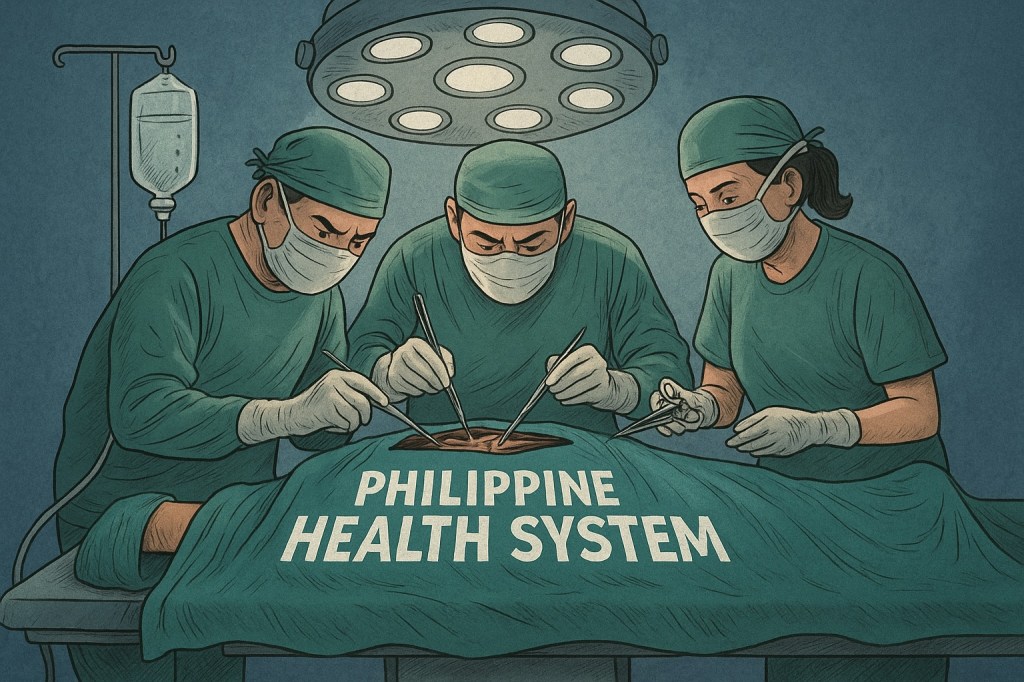
The chronic underinvestment in Philippine health care has long been evident. At roughly 5 percent of GDP, health spending falls short of the 7 percent recommended by the World Health Organization for countries at the Philippines’ level of development. This leaves hospitals overcrowded, rural clinics understaffed, and laboratories under-equipped. During the pandemic, these weaknesses turned deadly, as reactive, crisis-driven measures failed to prevent thousands of avoidable deaths. Building resilience requires a different approach: one that invests in foresight rather than scrambling in response. Barangay health stations and municipal clinics must be expanded, laboratories equipped for early detection, and surveillance systems strengthened to monitor climate-sensitive pathogens — from dengue-carrying mosquitoes to waterborne bacteria and zoonotic spillovers from displaced animal habitats. The Universal Health Care Act of 2019 remains a promising framework, but it demands consistent funding and transparent implementation. Health must also be fully integrated into disaster risk reduction, so that every evacuation plan for floods or heatwaves includes sanitation, medical care, and continuity of services. Governance, in short, must move from reactive firefighting to preventive protection.
Private Sector: Profits, Common Good, and Market Growth
The private sector has often seen health as a narrow concern — workplace safety, employee wellness programs, and insurance coverage. Yet the pandemic blurred the line between workplace and community health, and climate change is erasing that line altogether. Companies cannot thrive in communities plagued by heat stress, dengue outbreaks, or constant flooding. Businesses have both a duty and an interest in treating public health as part of their mandate. Employers can provide cooling spaces and flexible work arrangements that protect workers during extreme heat. Developers can invest in urban greening — shaded walkways, green roofs, and pocket parks — that reduce urban heat islands while also enhancing livability. Agribusiness and food companies can strengthen surveillance of livestock and wildlife supply chains to reduce the risk of zoonotic diseases. And perhaps most crucially, corporations must abandon collusion in corruption that drains public resources, and instead align their investments with public health goals. When companies shift from seeing health as a cost to seeing it as a source of resilience, they contribute to the common good — and in the process, they strengthen the very markets on which they depend. From profits, to common good, to market growth: this must become the cycle of a sustainable economy.
From Pandemic Lessons to Climate Futures
There are models worth emulating. Cuba, despite its limited wealth, has built one of the world’s most resilient health systems by focusing on prevention and community care. Thailand, through its Universal Health Coverage reforms, demonstrated that even middle-income countries can achieve broad, equitable access to health. Medellín in Colombia reduced urban heat and improved public health simultaneously by creating “green corridors” — an integrated approach that Philippine cities could readily adapt. And closer to home, Marikina has shown how disaster response can be health-centered, Iloilo has rehabilitated its riverbanks to reduce disease risks and improve urban space, and barangay health workers across the country have demonstrated resilience against all odds.
The pandemic revealed the costs of a health system that is underfunded, reactive, and corrupt. Climate change is now amplifying those risks, ensuring that floods, storms, and heatwaves will increasingly shape the health of the nation. Building resilience is not optional; it is survival. It begins with citizens who treat health as a shared responsibility, continues with governance that invests in prevention rather than reaction, and extends to a private sector that recognizes public health as both duty and opportunity. The lesson of the pandemic is clear: resilience is not simply bouncing back. It is transforming the very systems that failed — so that they do not fail again in the face of the next crisis.

